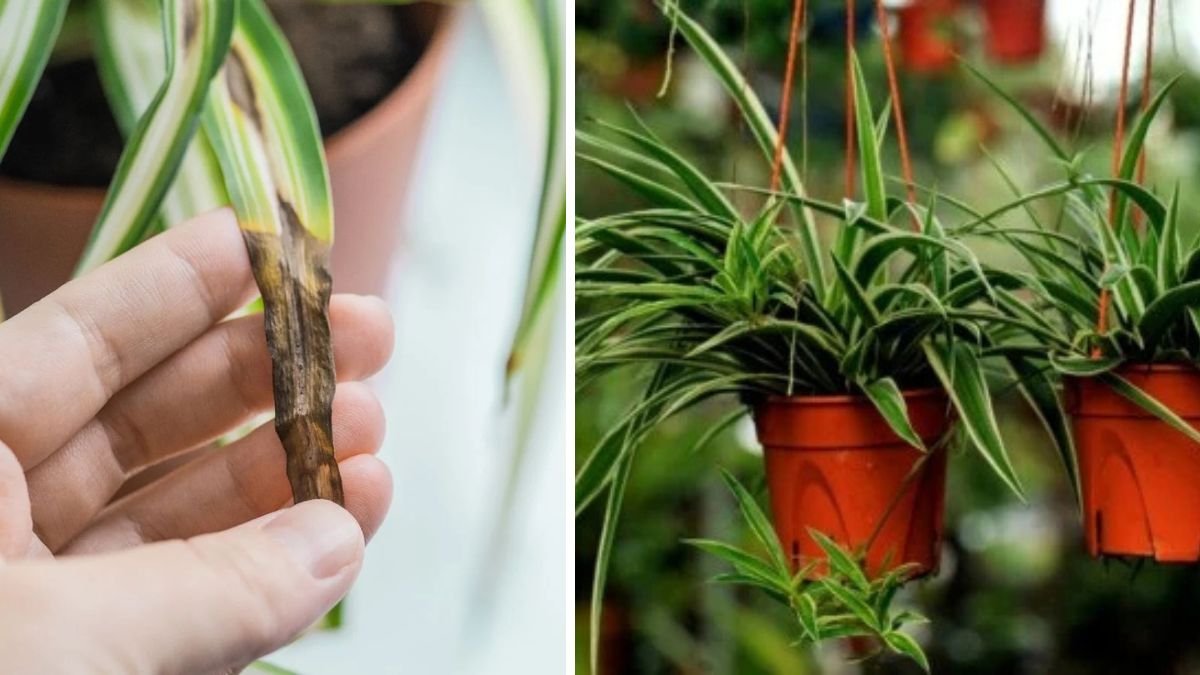
Background: Why Spider Plant Tips Turn Brown
Spider plants (Chlorophytum comosum) are famous for being tough, adaptable, and beginner-friendly. Yet even this resilient houseplant frequently develops brown leaf tips, leaving owners confused and frustrated. While brown tips rarely mean the plant is dying, they are a clear signal that something in its care routine or environment is off balance.
In their native habitat, spider plants grow on forest floors in warm regions of Africa, where moisture levels, humidity, and light remain relatively stable. Indoors, however, they are exposed to dry air, inconsistent watering, chemical-treated water, and fluctuating temperatures. Because leaf tips are the farthest point from the roots, they are the first place stress becomes visible.
Understanding the 13 common mistakes that cause brown tips on spider plants is the key to preventing the problem and keeping your plant healthy long-term.
1. Overwatering the Plant
One of the most common causes of brown tips is overwatering. When spider plant roots sit in soggy soil, oxygen flow is restricted, leading to root damage or rot. Damaged roots cannot deliver water efficiently to the leaves, which paradoxically results in dry, brown tips.
Spider plants prefer evenly moist soil that is allowed to dry slightly between waterings.
2. Underwatering
While spider plants tolerate short dry spells, prolonged underwatering causes dehydration. When the plant cannot access enough moisture, it prioritizes survival over leaf health, allowing tips to dry out and turn brown.
The goal is balance—neither bone-dry nor constantly wet soil.
3. Inconsistent Watering Habits
Even if you water regularly, inconsistency can stress the plant. Alternating between overwatering and underwatering disrupts root function and nutrient uptake, often showing up as browning leaf tips.
Rather than watering on a fixed schedule, always check soil moisture before watering.
4. Low Indoor Humidity
Dry indoor air is a major contributor to brown tips, especially in winter when heating systems reduce humidity. Spider plants prefer moderate humidity levels and struggle when the air is too dry.
Low humidity causes excessive moisture loss through the leaves, leading to crisp, brown tips.
5. Using Tap Water High in Chemicals
Spider plants are particularly sensitive to chemicals commonly found in tap water, such as chlorine, fluoride, and dissolved salts. Over time, these chemicals accumulate in the soil and burn leaf tips.
If brown tips keep appearing despite good watering habits, water quality may be the issue.
6. Salt Buildup in the Soil
Even when fertilizer is used correctly, salts can accumulate in the soil over time. Mineral buildup interferes with water absorption and pulls moisture away from roots, causing leaf tip burn.
Salt buildup often appears as white residue on the soil surface or pot rim.
7. Over-Fertilizing
Spider plants do not need heavy feeding. Over-fertilizing leads to excess nutrients and salt buildup, damaging roots and leaf tissue. Brown tips are often the first visible sign of fertilizer stress.
Feeding lightly and less frequently is always safer than overfeeding.
8. Too Much Direct Sunlight
Although spider plants enjoy bright light, direct sunlight—especially midday sun—can scorch their leaves. Sunburn damages leaf tissue, causing browning at the tips and edges.
Bright, indirect light is ideal for healthy growth.
9. Insufficient Light
On the opposite end of the spectrum, too little light can weaken a spider plant. Low light slows photosynthesis, reduces energy production, and makes the plant more vulnerable to stress.
A weakened plant may show browning tips even if watering and humidity are adequate.
10. Temperature Stress and Drafts
Spider plants prefer stable temperatures. Exposure to cold drafts, hot air from heaters, or sudden temperature changes can shock the plant, interrupting water flow within the leaves.
Brown tips often appear after moving a plant near vents, doors, or windows.
11. Poor-Quality or Compacted Soil
Dense or low-quality potting soil can trap excess moisture or restrict root growth. Poor drainage leads to stressed roots, which directly impacts leaf health.
Spider plants perform best in loose, well-draining potting mixes.
12. Being Root-Bound
Spider plants grow quickly and can become root-bound in small pots. When roots have no room to expand, water and nutrients cannot circulate efficiently, leading to browning tips and slowed growth.
Crowded roots are a common issue in mature spider plants.
13. Pests or Disease Issues
Although spider plants are generally pest-resistant, infestations such as spider mites or aphids can damage leaf tissue. In rare cases, fungal or bacterial issues may also contribute to browning.
Pests often cause additional symptoms like stippling, yellowing, or webbing.
How to Fix and Prevent Brown Tips on Spider Plants
Once you identify the cause, correcting brown tips is usually straightforward. While damaged leaf tissue will not turn green again, new growth should emerge healthy once conditions improve.
Improve Watering Practices
Water only when the top inch of soil feels dry, and always empty saucers after watering to prevent standing water.
Switch to Better Water
Use distilled, filtered, or rainwater when possible. If tap water is your only option, let it sit out for 24 hours before watering to allow chemicals to dissipate.
Flush the Soil Regularly
Every few months, flush the soil thoroughly with clean water to remove accumulated salts and minerals.
Increase Humidity
Raise humidity by grouping plants together, using a humidifier, or placing the pot near—but not in—a tray of water.
Adjust Light Exposure
Place spider plants near bright windows with filtered light. Avoid direct sun exposure that can scorch leaves.
Maintain Stable Temperatures
Keep plants away from heating vents, air conditioners, and drafty windows. Aim for consistent indoor temperatures.
Repot When Necessary
If roots are tightly packed or circling the pot, repot into a container one size larger with fresh, well-draining soil.
Monitor for Pests
Inspect leaves regularly and treat infestations early with gentle solutions such as insecticidal soap or neem oil.
Quick Care Checklist
- Bright, indirect light
- Moderate humidity
- Even watering, no extremes
- Filtered or distilled water
- Light, infrequent fertilizing
- Well-draining soil
- Occasional repotting
Authoritative Sources to Reference
For added credibility and deeper reading, consider linking to:
- Better Homes & Gardens – Spider plant care and troubleshooting
- Epic Gardening – Houseplant care guides
- Royal Horticultural Society (RHS) – Indoor plant health resources
- University extension horticulture programs
Final Thoughts
Brown tips may be common, but they are not inevitable. By understanding the 13 common mistakes that cause brown tips on spider plants, you can quickly identify what your plant is reacting to and make simple adjustments. Spider plants are forgiving and resilient, and with consistent care, they reward you with lush foliage, vigorous growth, and long-lasting beauty.
With the right balance of water, light, humidity, and soil, brown tips can become a thing of the past—and your spider plant can thrive for years to come.