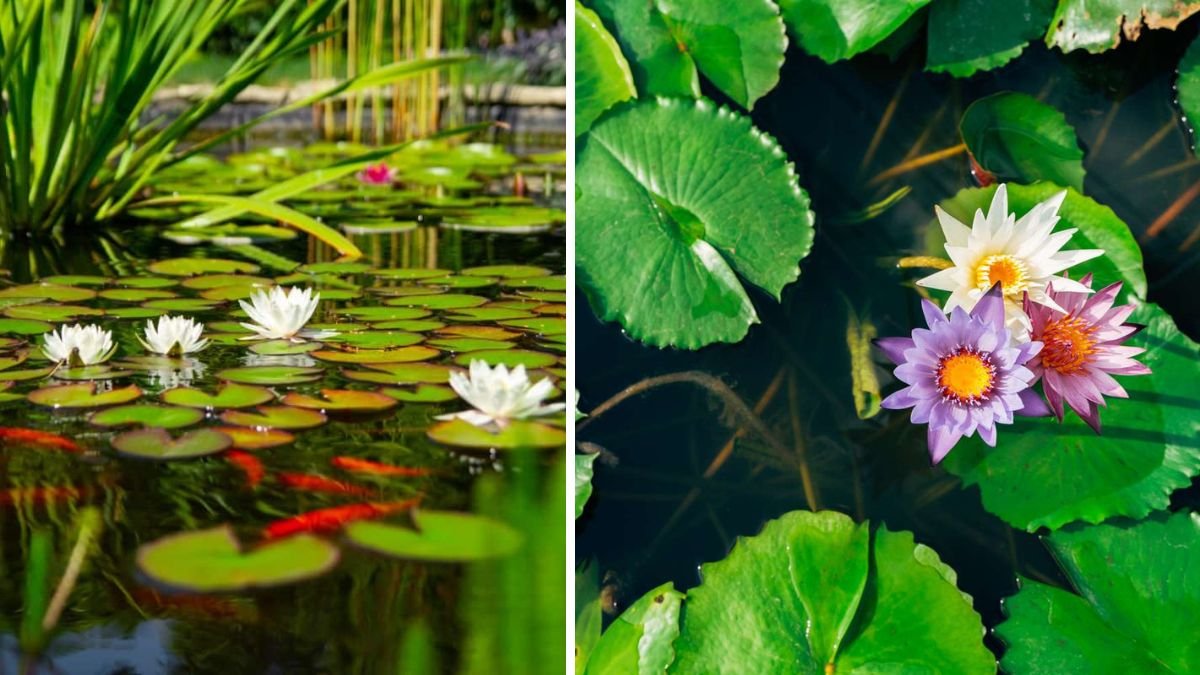
Miniature water gardens and small ponds are perfect for bringing a touch of tranquility to any outdoor or indoor space — even where room is limited. With the right plant selection, a small aquatic landscape can become a vibrant ecosystem, full of color, texture, and movement. Choosing the best small aquatic plants ensures healthy water quality, natural shade, and stunning visual appeal. In this guide, we highlight 15 small aquatic plants for beautiful miniature water gardens that are easy to grow, maintain, and enjoy.
1. Water Lettuce (Pistia stratiotes)
Water lettuce floats gracefully on the water’s surface, forming rosettes of soft green leaves that resemble a head of lettuce. Its floating leaves provide shade, limit algae growth, and create hiding spaces for fish and beneficial insects. This plant thrives in still water and adds a lush, tropical feel to miniature ponds or container water gardens. (brindavanagardens.com)
Care Tip: Keep water temperature moderate and remove excess plants to prevent overcrowding.
2. Dwarf Water Lily (Nymphaea spp.)
Dwarf water lilies are a classic choice for small water gardens. Compact varieties produce floating leaves and vibrant blooms in pink, white, or yellow. They provide shade to the water, reducing algae growth and adding a focal point in any miniature pond. (brindavanagardens.com)
Care Tip: Plant rhizomes in a container submerged 6–12 inches below the water surface.
3. Parrot’s Feather (Myriophyllum aquaticum)
Parrot’s Feather features feathery, bright green foliage that can float or emerge above the water. It oxygenates the water and filters impurities while adding soft texture and visual interest along pond edges. (aquascapeinc.com)
Care Tip: Trim regularly to control spread and prevent it from overtaking smaller ponds.
4. Miniature Cattail (Typha minima)
Miniature cattails add traditional pond charm in a compact form, usually under 18 inches tall. Their slender leaves and small brown flower spikes bring vertical height without dominating small water gardens. (brindavanagardens.com)
Care Tip: Plant in shallow water or the pond margin for natural support.
5. Pickerel Rush (Pontederia cordata)
Pickerel rush offers glossy leaves and spikes of blue or purple flowers, thriving in pond margins. It blooms from late spring through fall, attracts pollinators, and helps absorb excess nutrients from the water. (brindavanagardens.com)
Care Tip: Provide moderate sunlight and shallow water margins for best growth.
6. Creeping Jenny (Lysimachia nummularia)
Creeping Jenny is a trailing plant with bright yellow-green foliage that softens pond edges. It stabilizes soil and creates a lively contrast to deeper water tones, enhancing visual interest in small aquatic gardens. (brindavanagardens.com)
Care Tip: Trim back as needed to prevent excessive spreading.
7. Water Hyacinth (Eichhornia crassipes)
Water hyacinth floats freely and produces glossy leaves with occasional purple flowers. It purifies water by absorbing nutrients that would otherwise fuel algae growth. In miniature ponds, water hyacinth should be contained to prevent overcrowding. (brindavanagardens.com)
Care Tip: Remove excess plants regularly to maintain balance in your pond.
8. Dwarf Papyrus (Cyperus haspan)
Dwarf papyrus provides elegant, umbrella-like stems and a tropical feel. Compact in size, it thrives in shallow water and adds vertical interest to small ponds or container water gardens. (brindavanagardens.com)
Care Tip: Plant in shallow water or a partially submerged container for support.
9. Marsh Marigold (Caltha palustris)
Marsh marigold blooms in early spring with bright yellow flowers. It grows well in shallow, sunlit margins or boggy spots and provides early-season color before many other aquatic plants flower. (brindavanagardens.com)
Care Tip: Protect from extreme winter frost with mulch if grown in temperate climates.
10. Floating Heart (Nymphoides peltata)
Floating Heart is a small, charming alternative to water lilies. Its heart-shaped leaves float on the surface, paired with yellow flowers. It spreads slowly, making it suitable for confined water features. (ponduniverse.com)
Care Tip: Limit its spread by thinning plants periodically.
11. Duckweed (Lemna spp.)
Duckweed is one of the smallest aquatic plants, forming a delicate green carpet on the water’s surface. It shades the water, limits algae growth, and absorbs excess nutrients. (plantove.com)
Care Tip: Monitor coverage; duckweed can grow rapidly and may require thinning.
12. Hornwort
Hornwort is a submerged plant that floats freely or anchors in containers. Its bushy stems oxygenate water and offer hiding spots for aquatic life while controlling algae by absorbing nutrients. (gardeningdailytips.com)
Care Tip: Trim excess growth to maintain water circulation.
13. Pennywort
Pennywort has round, floating leaves that bring a neat, classical appearance to small ponds. It establishes quickly, thrives in moderate sunlight, and absorbs nutrients from the water while providing shelter for aquatic creatures. (gardeningdailytips.com)
Care Tip: Remove excess runners to prevent overcrowding.
14. Water Wisteria (Hygrophila difformis)
Water wisteria features feathery, delicate leaves that sway underwater, creating lush textures. It adapts to various lighting conditions and helps compete with algae by consuming excess nutrients. (balconygardenweb.com)
Care Tip: Plant in submerged soil or allow to float in small ponds for flexibility.
15. Sweetflag, Dwarf Variegated (Acorus gramineus variegatus)
Dwarf variegated sweetflag adds bright green and white striped foliage, ideal for edges or shallow shelves. Compact and elegant, it brightens small ponds and provides contrast to darker green aquatic plants. (aquascapeinc.com)
Care Tip: Plant at shallow margins and maintain moderate moisture.
Why Small Aquatic Plants Are Essential
Small aquatic plants do more than look beautiful. They play a crucial role in maintaining balanced miniature ecosystems:
- Provide shade to reduce algae growth.
- Absorb excess nutrients and improve water clarity.
- Oxygenate water and create shelter for aquatic life.
- Add year-round visual interest through flowers, foliage, and floating textures. (homegardeningonline.com)
These plants turn even a tiny pond into a thriving, self-sustaining ecosystem.
Design Tips for Miniature Water Gardens
- Mix floating and marginal plants to create depth and contrast. Floating plants like water lettuce and duckweed shade the water, while marginals such as pickerel rush and dwarf papyrus add height.
- Plant in zones: shallow margins for emergent species, deeper zones for floaters and submerged plants.
- Avoid overplanting: start with a few species and expand gradually.
- Balance light and shade: some plants prefer full sun, others partial shade.
These strategies maintain water quality, support plant health, and create a visually harmonious water garden.
Authoritative Sources
- Aquascape Inc. – Small Pond Plant Guides (aquascapeinc.com)
- Brindavana Gardens – Water Feature Plant Ideas (brindavanagardens.com)
- Home Gardening Online – Small Water Garden Plants (homegardeningonline.com)
These provide expert guidance for planting, maintenance, and design of miniature water gardens.
Conclusion
Creating a miniature water garden doesn’t require a large pond. With small aquatic plants like water lettuce, dwarf water lilies, hornwort, and parrot’s feather, even the smallest container or backyard pond can become a thriving aquatic oasis. These 15 plants provide beauty, ecological balance, and year-round interest, allowing beginners and experienced gardeners alike to enjoy the charm of water gardens.
Start small, design thoughtfully, and watch your miniature water garden bloom into a serene, colorful retreat. 🌿💧