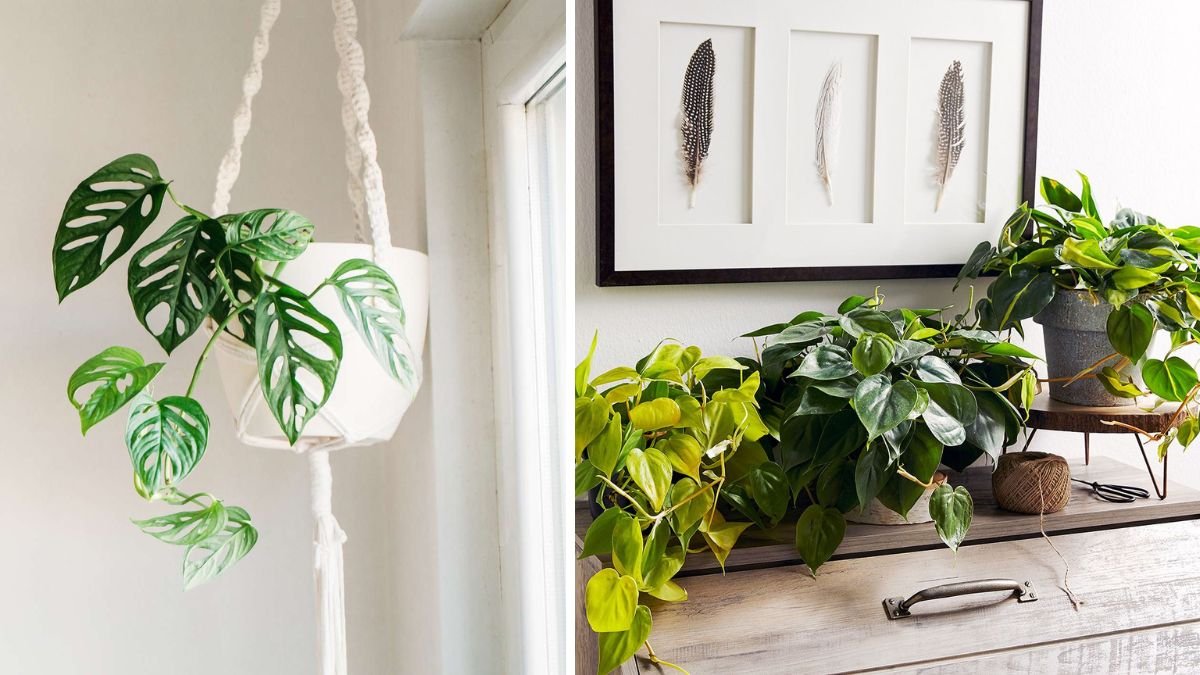
Why Climbing and Hanging Indoor Plants Are So Popular
Climbing and hanging indoor plants have become a major interior design trend—and for good reason. These plants make use of vertical space, soften hard lines, and create a lush, layered look without crowding floors or tabletops. Even better, many of the most popular trailing and climbing houseplants are fast growing and tolerant of low light, making them ideal for apartments, offices, and homes with limited sunlight.
Unlike sun-hungry plants that struggle indoors, low light climbers adapt well to indirect light and even shaded corners. With minimal care, they grow long vines that cascade from shelves, trail from hanging baskets, or climb trellises and moss poles. Whether you’re a beginner or an experienced plant parent, these plants deliver maximum impact with minimal effort.
Below are the 7 best climbing and hanging indoor plants that grow quickly and thrive in low light conditions.
1. Golden Pothos (Epipremnum aureum)
Golden pothos is often considered the ultimate low light houseplant—and for good reason. This fast-growing vine adapts to nearly any indoor environment and looks equally stunning trailing from a shelf or climbing a support.
Its heart-shaped green leaves, often streaked with yellow or cream, grow quickly and can reach impressive lengths indoors. Pothos is also known for its resilience, bouncing back even if you occasionally forget to water it.
Why it’s ideal:
- Thrives in low to medium indirect light
- Extremely fast growing
- Low maintenance and beginner-friendly
Allow the soil to dry slightly between waterings and prune occasionally to encourage fuller growth.
2. Heartleaf Philodendron (Philodendron hederaceum)
Heartleaf philodendron is another classic climbing and hanging plant that excels in low light. Its soft, trailing vines and deep green, heart-shaped leaves make it a favorite for cozy, minimalist interiors.
This plant grows quickly when happy and can be trained to climb poles or left to spill gracefully from hanging planters. It’s also highly forgiving, tolerating inconsistent watering better than many houseplants.
Why it’s ideal:
- Excellent low light tolerance
- Fast vine growth
- Perfect for hanging baskets or shelves
Water when the top inch of soil feels dry, and wipe leaves occasionally to keep them glossy.
3. Arrowhead Plant (Syngonium podophyllum)
The arrowhead plant begins life as a compact plant but gradually develops trailing or climbing vines as it matures. Its distinctive arrow-shaped leaves come in a range of colors, from classic green to pink and variegated varieties.
Syngonium adapts well to lower light conditions and grows quickly when placed in indirect light. With support, it becomes a climber; without it, it makes an attractive hanging plant.
Why it’s ideal:
- Fast growth with minimal light
- Decorative foliage
- Versatile growth habit
Keep the soil lightly moist and rotate the plant occasionally to maintain even growth.
4. Creeping Fig (Ficus pumila)
Creeping fig is a small-leaved climbing plant that creates a dense, textured look indoors. While often used outdoors, it adapts surprisingly well to indoor conditions when given indirect light and consistent care.
This plant grows quickly and can be trained along trellises, walls, or allowed to trail from containers. Regular pruning helps manage its vigorous growth and encourages bushiness.
Why it’s ideal:
- Excellent vertical coverage
- Tolerates low to medium light
- Unique, fine-textured foliage
Maintain evenly moist soil and avoid letting it dry out completely.
5. Monstera Adansonii (Swiss Cheese Vine)
Monstera adansonii is prized for its eye-catching leaves filled with natural holes, giving it a bold, tropical look. While it prefers brighter indirect light, it still performs well in moderate to low light conditions.
This plant grows fast and can climb moss poles or trail elegantly from hanging baskets. As it matures, the leaves become larger and more dramatic.
Why it’s ideal:
- Fast-growing tropical vine
- Striking foliage
- Suitable for climbing or hanging
Water when the top layer of soil dries out and provide occasional misting for humidity.
6. Scindapsus Pictus (Silver Satin Pothos)
Scindapsus pictus, often called silver satin pothos, is a close relative of pothos with velvety green leaves marked by silvery patterns. It thrives in low light and grows steadily, making it perfect for dim corners that need a decorative boost.
This plant trails beautifully from shelves or hanging planters and is easy to propagate, allowing you to expand your collection effortlessly.
Why it’s ideal:
- Thrives in low light
- Attractive silver-patterned leaves
- Easy care and propagation
Avoid overwatering and ensure good drainage for healthy growth.
7. English Ivy (Hedera helix)
English ivy is a classic trailing and climbing plant that adapts well to indoor environments. Its lobed leaves and cascading growth add a timeless look to bookshelves, windowsills, and hanging baskets.
While it prefers cooler indoor temperatures, English ivy tolerates low light better than many climbing plants and grows steadily with proper care.
Why it’s ideal:
- Classic trailing appearance
- Handles low to medium light
- Great for hanging or climbing
Keep soil slightly moist and provide good air circulation to prevent pests.
How to Care for Low Light Climbing and Hanging Plants
While these plants are low maintenance, a few simple care tips will help them grow faster and look their best.
Light:
Low light doesn’t mean no light. Place plants near windows with filtered sunlight or in well-lit rooms without direct sun exposure.
Watering:
Most trailing plants prefer slightly dry soil between waterings. Overwatering is a more common problem than underwatering in low light.
Support:
Climbing plants benefit from moss poles, trellises, or stakes, which encourage larger leaves and stronger growth.
Pruning:
Regular trimming keeps vines tidy and promotes fuller, bushier growth.
Why These Plants Are Perfect for Modern Homes
Fast-growing climbing and hanging indoor plants are ideal for today’s living spaces, where natural light is often limited and space is at a premium. They improve aesthetics, add a calming natural element, and require very little daily attention.
From minimalist apartments to cozy home offices, these plants create an instant visual upgrade while remaining practical and accessible for all skill levels.
Suggested Authoritative Sources
For further reading and plant care guidance, explore these trusted resources:
- Southern Living – Indoor plant care and design inspiration
- Garden Design Magazine – Expert houseplant advice
- Royal Horticultural Society (RHS) – Plant identification and care guides
- University Extension Gardening Programs – Science-based plant care resources
Final Thoughts
If you’re searching for fast growing, low light houseplants, climbing and hanging varieties are among the best choices you can make. With minimal care, these seven plants provide lush greenery, flexible styling options, and year-round beauty. Whether cascading from a shelf or climbing toward the ceiling, they transform ordinary rooms into vibrant indoor gardens—no bright sunlight required.