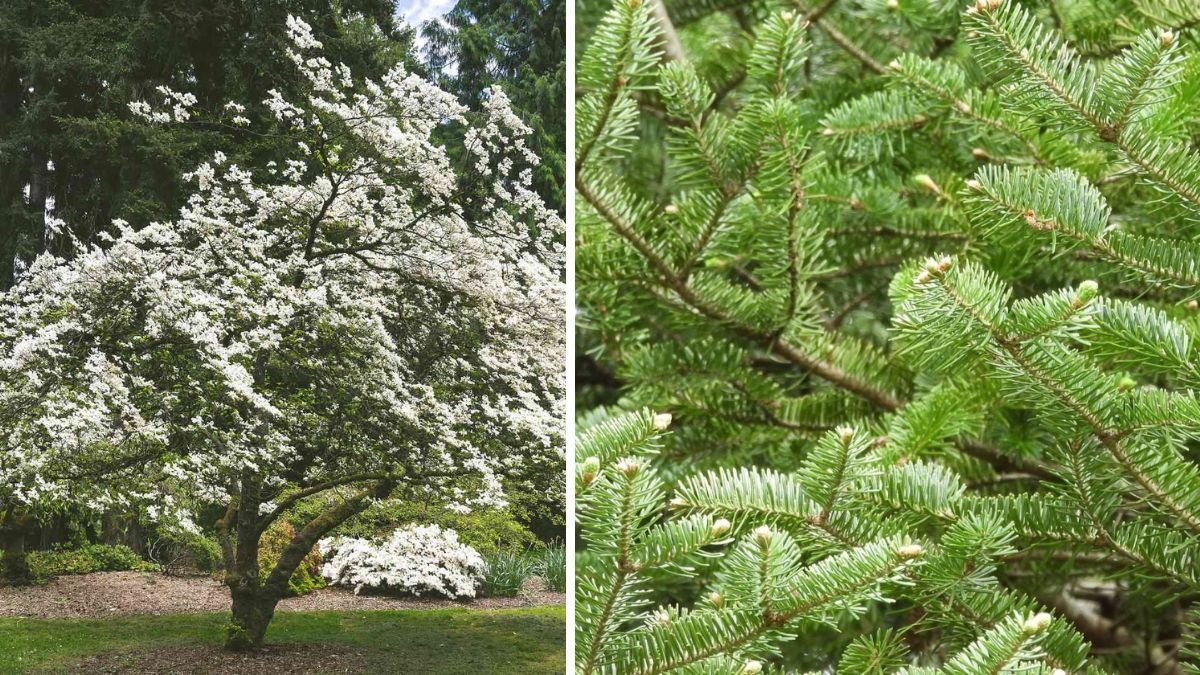
Fir trees are a classic choice for home landscapes, offering year-round greenery, elegant forms, and low-maintenance appeal. From towering specimens to more compact varieties, firs can serve as striking focal points, privacy screens, or seasonal decorations. Experts in horticulture recommend certain species for their adaptability, aesthetic appeal, and resilience, making them ideal for long-term planting in residential gardens.
This guide explores seven of the best fir trees for home landscapes, including tips on planting, care, and how to maximize their beauty in your outdoor space.
Why Choose Fir Trees
Fir trees (Abies spp.) are evergreen conifers known for their needle retention, symmetrical growth, and versatility. Their benefits for home landscapes include:
- Year-round greenery: Fir trees provide consistent color, even in winter.
- Diverse sizes and shapes: Options range from compact dwarf varieties to large specimens suitable for privacy screens.
- Wildlife habitat: They attract birds and small mammals, adding ecological value.
- Low maintenance: Once established, firs generally require minimal care aside from occasional pruning.
According to horticulturists, the key to success with firs is selecting the right species for your climate, soil, and intended garden purpose.
1. Fraser Fir (Abies fraseri)
- Growth habit: Narrow, pyramidal; grows 30–50 feet tall in ideal conditions.
- Foliage: Soft, dark green needles with silver undersides.
- Why it’s recommended: Fraser firs are disease-resistant, fragrant, and maintain a dense, symmetrical form—making them perfect as a focal point or for holiday décor.
- Care tips: Full sun to partial shade; well-draining, slightly acidic soil; protect from strong winds.
Experts highlight Fraser firs for their uniform growth and longevity in residential landscapes.
2. Balsam Fir (Abies balsamea)
- Growth habit: Narrow to medium-width pyramidal, reaching 40–60 feet.
- Foliage: Dark green needles, aromatic when crushed.
- Why it’s recommended: Balsam fir is cold-hardy, attractive to wildlife, and has a classic Christmas tree shape.
- Care tips: Prefers full sun and moist, acidic soil; prune lightly to maintain symmetry.
Horticulturists note that balsam firs perform well in northern climates and provide a traditional, year-round evergreen presence.
3. Caucasian Fir (Abies nordmanniana)
- Growth habit: Broad pyramidal with dense foliage, reaching 60–80 feet.
- Foliage: Glossy dark green needles, often with a slightly bluish tint.
- Why it’s recommended: Extremely hardy and tolerant of varied soil conditions; widely used in parks and large landscapes.
- Care tips: Full sun exposure; ensure adequate space due to size; water regularly during establishment.
Experts praise the Caucasian fir for its striking appearance and durability in diverse environments.
4. Noble Fir (Abies procera)
- Growth habit: Tall and narrow, typically 50–75 feet; elegant upward-angled branches.
- Foliage: Blue-green needles with a soft texture.
- Why it’s recommended: Resistant to disease and insect damage; excellent for specimen planting or as a natural windbreak.
- Care tips: Prefers moist, well-draining soil; full sun; provide space for mature width.
Horticulturists often recommend Noble firs for their beauty, needle retention, and resilience against harsh winter conditions.
5. Dwarf Concolor Fir (Abies concolor ‘Compacta’)
- Growth habit: Slow-growing, compact; ideal for smaller landscapes or containers.
- Foliage: Silvery-blue needles with soft texture.
- Why it’s recommended: Perfect for limited spaces while still offering the evergreen appeal of larger firs.
- Care tips: Full sun to partial shade; well-draining soil; minimal pruning needed.
Experts recommend this dwarf variety for gardeners who want the look of a fir without committing to a full-size tree.
6. Korean Fir (Abies koreana)
- Growth habit: Small to medium pyramidal, 20–40 feet tall.
- Foliage: Dark green needles with striking silvery undersides; produces ornamental purple cones.
- Why it’s recommended: Hardy in a range of climates, ornamental cones add visual interest year-round.
- Care tips: Plant in full sun to light shade; acidic, well-draining soil; protect from extreme heat.
Horticulturists praise Korean firs for their unique aesthetic and manageable size, making them ideal for home gardens.
7. White Fir (Abies concolor)
- Growth habit: Broad pyramidal; grows 40–70 feet tall.
- Foliage: Soft, silvery-blue needles; aromatic.
- Why it’s recommended: Drought-tolerant once established and resistant to many pests; adds a soft, airy texture to landscapes.
- Care tips: Full sun; deep, well-draining soil; mulch to retain moisture during establishment.
Experts highlight the white fir for its adaptability and attractive needle color, which contrasts beautifully with darker evergreens in a garden.
Expert Tips for Planting and Maintaining Fir Trees
- Select the right site: Ensure enough space for height and spread; consider sunlight, soil, and wind exposure.
- Plant deeply, but not too deep: Root flare should sit at or slightly above ground level to encourage healthy root development.
- Water consistently during establishment: Newly planted firs need regular watering for the first 2–3 years.
- Mulch around the base: Retains moisture, suppresses weeds, and protects roots from temperature extremes.
- Monitor for pests and disease: Check for aphids, adelgids, and needle cast; prune infected areas promptly.
- Prune carefully: Minimal pruning is needed, mostly to maintain shape or remove damaged branches.
- Consider soil amendments: If soil is heavy clay or alkaline, mix in organic matter to improve drainage and acidity.
Experts emphasize that fir trees are relatively low-maintenance when planted in the right conditions but benefit from consistent monitoring during their early years.
Benefits of Fir Trees in Home Landscapes
- Year-round color and texture: Fir trees provide evergreen foliage even in the depths of winter.
- Wildlife habitat: They attract birds and beneficial insects.
- Natural privacy screens: Taller varieties block views and reduce wind.
- Low-maintenance elegance: Once established, firs require minimal care compared to deciduous trees or flowering shrubs.
- Versatility: Suitable for formal, informal, or naturalistic garden designs.
Horticulturists note that the right fir species can enhance the beauty, structure, and ecological value of any home landscape.
Final Thoughts
Choosing the best fir trees for your home landscape involves considering growth habit, hardiness, aesthetics, and maintenance requirements. Experts recommend Fraser, Balsam, Caucasian, Noble, Dwarf Concolor, Korean, and White firs as top options for residential gardens due to their durability, ornamental appeal, and adaptability.
By planting the right fir tree in a suitable location and following best practices for care, homeowners can enjoy decades of year-round beauty, structured greenery, and seasonal interest. Whether used as a specimen tree, privacy screen, or part of a mixed border, fir trees bring elegance, resilience, and long-term value to any landscape.