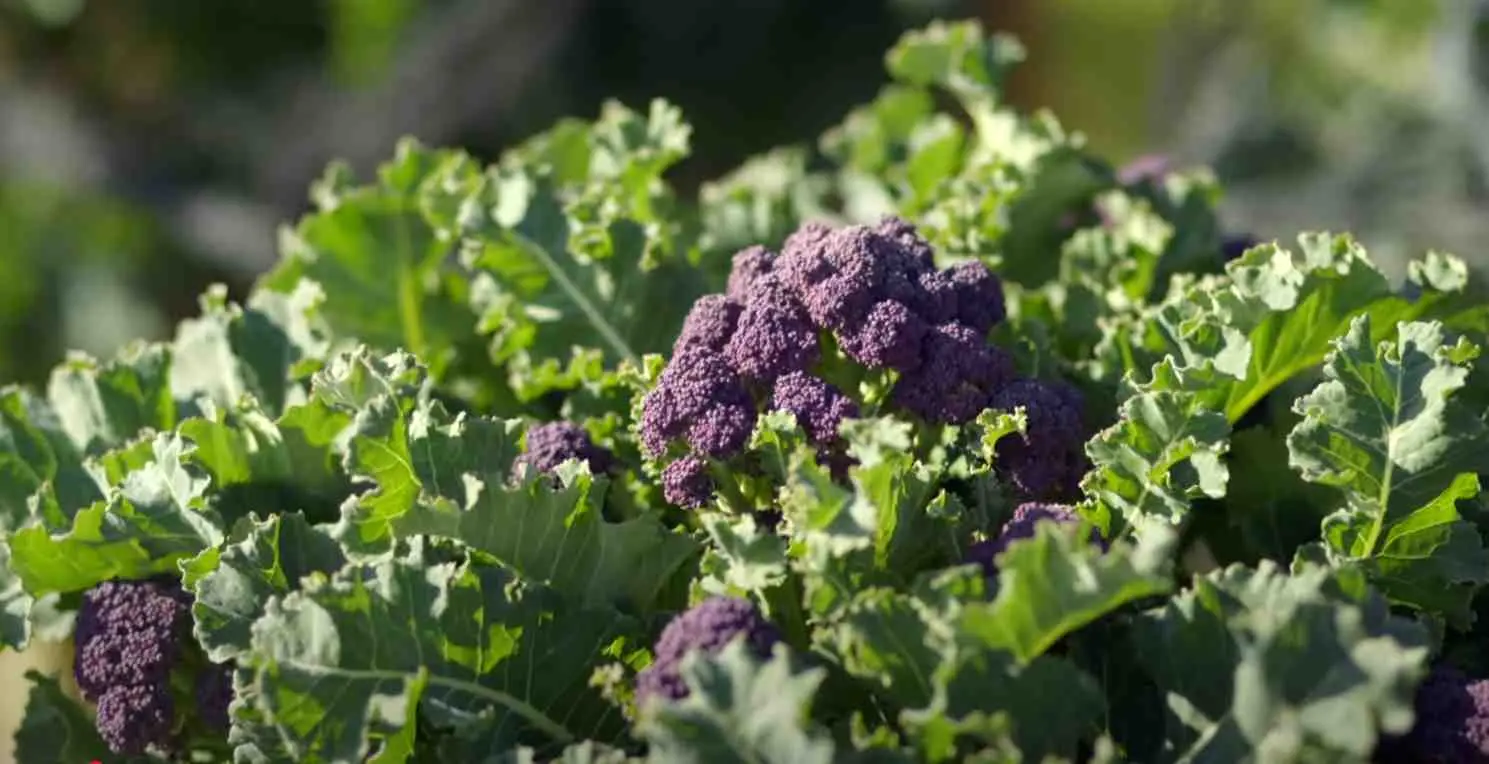
The purple color comes from anthocyanins, natural pigments that plants produce in response to stress. Broccoli uses these pigments as a protective mechanism, so the color change is often a signal rather than a death sentence.
1. Cold Temperatures (Most Common Cause)
What’s Happening
Broccoli is a cool-season crop, but cold stress—especially nighttime temperatures below 50°F (10°C)—can trigger purple pigmentation. Young plants are especially sensitive.
Signs
- Leaves turn purple or reddish-purple
- Growth may slow temporarily
- Plants otherwise look healthy
Solutions
- Use row covers or frost cloth during cold nights
- Mulch around plants to regulate soil temperature
- Start broccoli early enough so plants are established before cold snaps
- Don’t panic—plants often return to green as temperatures warm
This is the most common and least harmful cause.
2. Phosphorus Deficiency
What’s Happening
Phosphorus is essential for energy transfer and root development. When soil is cold, phosphorus becomes less available—even if it’s present—leading to purple leaves.
Signs
- Purple coloration on older leaves first
- Stunted growth
- Poor head development
Solutions
- Test your soil to confirm nutrient levels
- Add a balanced fertilizer or one higher in phosphorus (e.g., 5-10-10)
- Warm soil naturally with mulch or black plastic
- Maintain soil pH between 6.0–7.0 for best nutrient uptake
Cold soil often mimics phosphorus deficiency.
3. Poor Soil pH
What’s Happening
If soil is too acidic or too alkaline, broccoli can’t absorb nutrients effectively—even if they’re present.
Signs
- Purple or reddish leaves
- Yellowing or poor growth
- Weak root systems
Solutions
- Test soil pH
- Add lime to raise pH or sulfur to lower it
- Aim for slightly acidic to neutral soil
4. Stress From Transplanting
What’s Happening
Transplant shock can cause temporary stress that triggers anthocyanin production.
Signs
- Purple leaves shortly after transplanting
- Slowed growth for a week or two
Solutions
- Harden off seedlings before planting
- Transplant on cool, cloudy days
- Water well immediately after planting
This usually resolves on its own.
5. High Light Intensity
What’s Happening
Bright sunlight—especially when paired with cool temperatures—can cause leaves to produce purple pigments as protection.
Signs
- Purple coloring on leaf edges or veins
- Occurs more often in early spring or fall
Solutions
- Use shade cloth during extreme light conditions
- Ensure consistent watering to reduce stress
6. Genetic Trait (Not a Problem)
Some broccoli varieties naturally show purple hues, especially in cooler weather.
Signs
- Consistent purple tint across healthy leaves
- Normal growth and head formation
Solutions
- None needed
- Choose varieties bred for your climate if desired
This is purely cosmetic.
When Purple Leaves Are NOT a Problem
Purple leaves do not mean the broccoli is unsafe to eat. Even if the head itself develops a slight purple tint, it’s still perfectly edible and often sweeter after exposure to cold.
Quick Troubleshooting Checklist
Ask yourself:
- Have nighttime temperatures dropped recently?
- Is the soil cold or poorly draining?
- Has the plant been recently transplanted?
- Has fertilizer been applied?
- Has soil pH ever been tested?
If the answer is “yes” to cold or recent stress, the purple color is likely temporary.
How to Prevent Purple Leaves in the Future
- Plant at the right time for your climate
- Warm soil early with mulch
- Maintain proper nutrition
- Avoid sudden environmental changes
- Choose cold-tolerant varieties
Final Thoughts
Purple broccoli leaves are usually a sign of stress, not disease. Cold temperatures and temporary nutrient uptake issues are the most common causes, and in most cases, the plants recover on their own.
With warm soil, balanced nutrition, and steady care, your broccoli will return to vibrant green—and reward you with healthy, delicious heads.