Introduction
Celery is a crisp, nutrient-rich vegetable that adds flavor and crunch to salads, soups, and juices. Traditionally, growing celery has been associated with garden beds because of its water and nutrient needs. However, recent innovations in urban and small-space gardening have made it possible to grow celery without a traditional garden.
From containers on balconies to hydroponic systems and even regrowing celery from kitchen scraps, there are multiple effective methods that allow anyone to enjoy fresh, homegrown celery year-round. This guide explores all these methods, providing practical tips, expert advice, and space-saving ideas suitable for beginners and experienced gardeners alike.
Why Grow Celery Without a Garden?
Urban living often limits outdoor space, making balcony or indoor gardening an attractive alternative. Celery is particularly well-suited to small-space gardening because:
- Shallow roots: Celery’s root system is compact, allowing it to thrive in pots and containers.
- Continuous growth potential: Outer stalks can be harvested while the plant continues producing.
- High water content: Its natural water requirement can be easily met with indoor watering or hydroponics.
- Regrowth opportunity: Celery stalk bases can be reused to produce new plants, reducing waste.
Experts and gardening enthusiasts increasingly recommend container gardening and hydroponics for celery, especially for urban dwellers without a garden. These methods provide control over soil quality, water, and sunlight while producing crisp, flavorful stalks. (Martha Stewart)
Method 1: Growing Celery in Containers
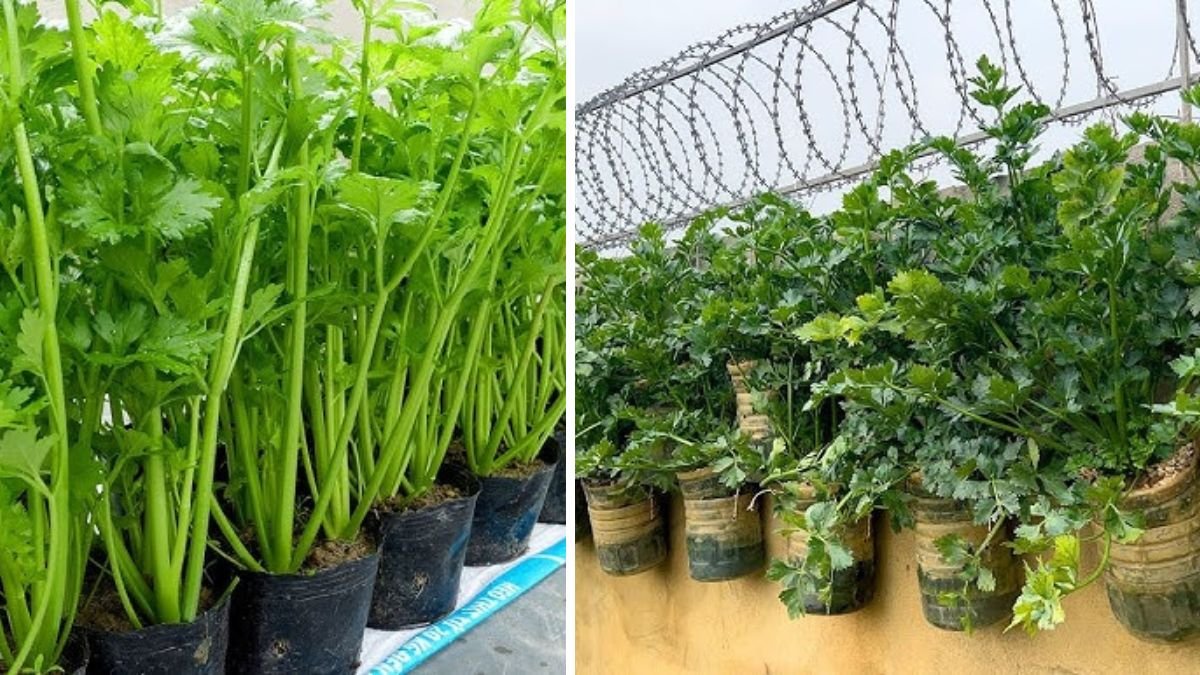
Container gardening is one of the simplest ways to grow celery without a garden. Celery thrives in pots or tubs, which allows you to move the plants to optimal light and protect them from harsh weather.
What You Need:
- Container at least 8–12 inches deep with drainage holes
- High-quality potting mix rich in organic matter
- Consistent watering schedule
- Balanced fertilizer or compost
Steps for Success:
- Fill your container with rich, well-draining potting soil.
- Plant celery seedlings or seeds according to spacing recommendations.
- Water regularly to maintain consistent moisture — celery is highly sensitive to drying out.
- Provide adequate sunlight — 6–8 hours of direct light or supplement with grow lights for indoor setups.
- Feed the plants every few weeks with organic compost or a balanced liquid fertilizer.
Raised containers on balconies or terraces also allow for easy rotation, sunlight optimization, and improved airflow around the plants, which reduces disease risk. (AgriFarming)
Method 2: Regrow Celery from Kitchen Scraps
One of the most satisfying and beginner-friendly methods is to regrow celery from kitchen scraps. This approach not only saves space but also turns leftovers into fresh produce.
Steps to Regrow Celery:
- Save the bottom 2–3 inches of celery stalks after cooking.
- Place the base in a shallow dish of water, with the cut side down.
- Position the dish on a sunny windowsill or near a light source.
- Change the water every 2–3 days to prevent stagnation.
- After a few days, small roots and shoots will start to appear.
- Once roots are established, transplant the celery into a container with potting soil.
This method is ideal for apartments or indoor spaces and introduces a simple, sustainable way to grow celery continuously. (The Cooldown)
Method 3: Hydroponic and Water-Based Growing
Hydroponics is a soil-free method that allows celery to grow efficiently using water and nutrients. It is especially effective indoors or in small apartments. The Kratky method is a popular, low-maintenance hydroponic approach.
Kratky Method Overview:
- Use an opaque container filled with nutrient solution.
- Place celery seedlings in net pots with grow media like clay pellets.
- Ensure roots are in contact with the nutrient solution.
- Provide 6–8 hours of light daily, either through natural sunlight or LED grow lights.
Hydroponics is space-efficient, reduces soil-borne pest issues, and produces fast, healthy celery. It is ideal for gardeners who want a clean, soil-free growing system indoors. (KratkyCelery)
Choosing the Right Environment
Whether you grow celery in containers, from scraps, or hydroponically, lighting and temperature are critical:
- Sunlight: Celery thrives in 6–8 hours of light. Use grow lights if natural sunlight is insufficient.
- Temperature: Ideal growth occurs in moderate temperatures with high humidity. Protect from extreme heat or frost.
- Airflow: Good airflow prevents mold and fungal growth in container setups.
Using containers and hydroponics allows precise control of these factors, ensuring higher success rates than traditional gardening in limited spaces. (House Beautiful)
Care Checklist for Growing Celery at Home
To maximize growth and yield:
- Water consistently: Celery prefers moist soil at all times but avoid waterlogging.
- Feed regularly: Use compost or a liquid fertilizer to support steady growth.
- Mulch soil: Helps retain moisture in containers and hydroponic systems.
- Prune outer leaves: Encourages continuous growth.
- Rotate containers: Ensures even sunlight distribution.
By following these steps, even beginners can enjoy fresh celery year-round.
Harvesting Your Homegrown Celery
Celery takes approximately 3–5 months to mature. For continuous harvest:
- Start harvesting outer stalks first, leaving the inner stalks to grow.
- Continue watering and feeding for ongoing production.
- Leaves can also be used in salads or soups.
Harvesting in stages allows you to enjoy celery continuously and encourages healthy regrowth. (The Spruce)
Benefits of Growing Celery Without a Garden
Growing celery indoors or on a balcony provides multiple advantages:
- Fresh produce year-round
- Sustainable and cost-effective
- Saves space in urban apartments
- Reduces food waste by regrowing scraps
- Adds greenery and improves air quality
This approach makes urban gardening accessible to everyone, providing healthy produce and enhancing indoor or balcony spaces.
Authoritative Sources
- Martha Stewart – Balcony and Indoor Vegetable Gardening
- The Cooldown – Regrow Celery at Home
- The Spruce – Indoor Microgreens and Vegetables
- House Beautiful – Indoor Vegetable Gardening
- Kratky Celery – Hydroponic Growing Guide
Conclusion
You don’t need a garden to grow celery effectively. Whether using containers on a balcony, regrowing from kitchen scraps, or employing hydroponic systems like Kratky, fresh, homegrown celery is achievable for urban gardeners of all experience levels.
With consistent watering, nutrient-rich soil or solutions, proper lighting, and simple care practices, you can enjoy crisp, flavorful celery year-round — all without a traditional garden. This approach is practical, sustainable, and perfect for modern living, allowing everyone to harness the benefits of homegrown produce in small spaces.