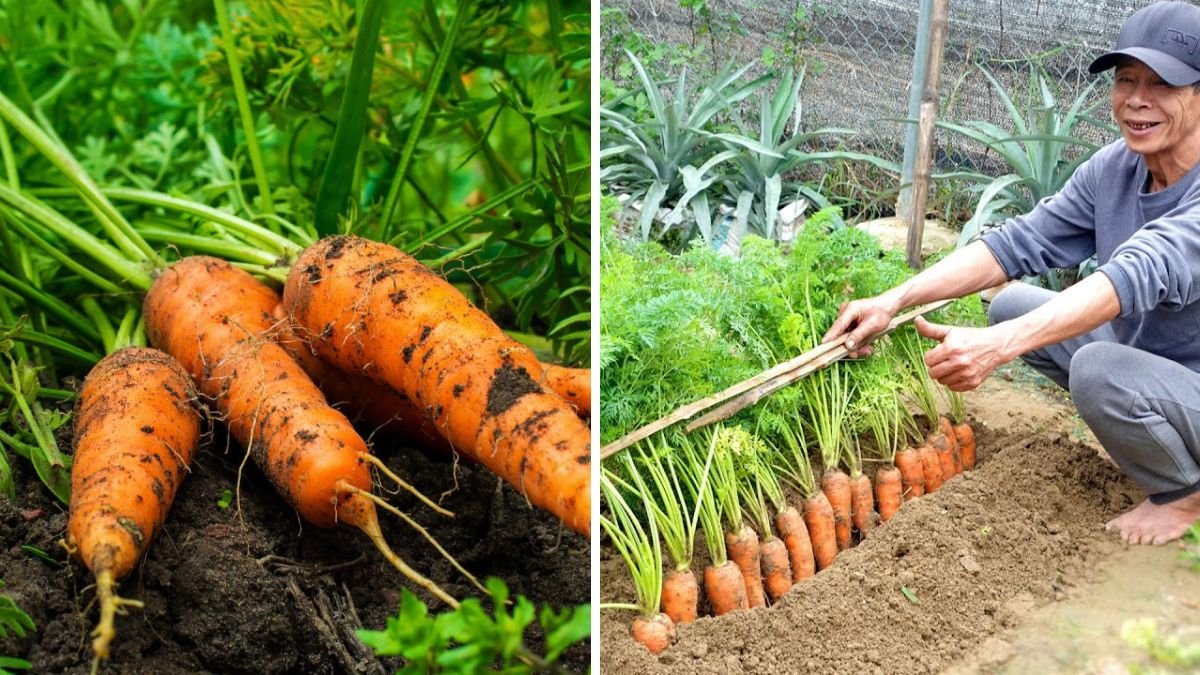
Carrots (Daucus carota) are one of the most popular and nutritious vegetables grown worldwide. Packed with vitamins, antioxidants, and fiber, they are essential for a healthy diet. Traditionally, growing carrots requires loose, deep soil to allow their roots to develop fully. However, recent innovations in gardening and urban farming have made it possible to grow carrots with up to three times higher yield — without a traditional garden.
This revolutionary approach combines high-yield carrot varieties, container gardening, hydroponic systems, and raised beds to provide an efficient, space-saving, and accessible solution for everyone. Whether you live in an apartment, have limited outdoor space, or want to maximize productivity, this guide will help you grow more carrots with less effort.
Why Carrot Yields Vary
Carrot yields are influenced by several factors, including soil quality, spacing, nutrient availability, climate, and variety. Traditional gardening often limits yield due to soil compaction, stones, and inconsistent nutrient supply. Carrots need deep, loose, and stone-free soil to grow straight and healthy roots. Any obstruction can lead to deformed carrots and reduced harvests.
Modern advancements have addressed these challenges through two key approaches:
1. High-Yield Carrot Varieties
Agricultural researchers have developed high-yielding carrot varieties capable of producing three times the output of traditional cultivars. For example, teams at Bangladesh Agricultural University have bred varieties that can yield 30–40 tons per hectare under optimal conditions. These carrots are resilient, fast-growing, and perform well in challenging environments, including urban settings and small spaces.
Marker-assisted selection (MAS) and genomic tools are being used to breed carrots with desirable traits such as root uniformity, disease resistance, and high nutrient content. These innovations allow gardeners and farmers to achieve maximum productivity with minimal space.
2. Soil-Free and Controlled Environments
Soilless cultivation methods like hydroponics and container gardening are transforming how we grow carrots. By controlling nutrients, water, and root environment, gardeners can accelerate growth, improve quality, and increase yield. These methods are ideal for urban spaces where traditional garden plots may not be available.
Innovative Ways to Grow Carrots Without a Traditional Garden
Container Gardening
Container gardening is one of the easiest ways to grow carrots without a traditional garden. Containers such as buckets, grow bags, wooden crates, or PVC pipes work well if they are deep enough to accommodate root growth (at least 12–18 inches or 30–45 cm).
Key tips for container carrot gardening:
- Use loose, sandy soil to prevent obstruction of the roots.
- Ensure proper drainage to avoid waterlogging.
- Place containers in a location that receives 6–8 hours of sunlight daily.
Container gardening allows you to grow carrots on balconies, terraces, patios, and even rooftops. It’s a perfect solution for urban dwellers and those with limited outdoor space.
Hydroponics and Soil-Free Systems
Hydroponics is a soil-free method where plants grow in nutrient-rich water. This system can produce faster growth and higher yields compared to traditional soil cultivation. Hydroponic setups can be simple or complex, ranging from shallow nutrient trays to vertical towers.
Benefits of hydroponic carrot cultivation include:
- Year-round production regardless of seasons.
- Efficient water usage, as water is recycled within the system.
- Reduced disease risk, since soil-borne pathogens are eliminated.
Hydroponics can be adapted to urban apartments, small patios, or greenhouses, enabling gardeners to maximize space and productivity. Vertical and stacked hydroponic systems allow multiple layers of carrots to grow simultaneously, significantly boosting yield per square foot.
Raised Beds
Raised beds are another effective method for soil-limited areas. They improve drainage, aeration, and soil fertility, creating ideal conditions for carrot roots. Raised beds can be built in small outdoor spaces or even on rooftops, making them an excellent alternative for urban gardeners.
Advantages of raised bed carrot gardening include:
- Better soil control for optimal growth.
- Easier maintenance and reduced pest problems.
- Enhanced root development for larger and straighter carrots.
Step-by-Step Guide to Growing High-Yield Carrots
Step 1: Select the Right Variety
Choose high-yield carrot seeds bred for productivity, disease resistance, and root quality. Varieties designed for container or hydroponic growth will perform best in small or soil-free systems.
Step 2: Prepare the Growing Medium
- For containers: Use loose, sandy, well-draining soil. Avoid heavy clay or rocky soil.
- For hydroponics: Use nutrient-rich water solutions and a support medium like perlite, vermiculite, or coconut coir.
- For raised beds: Ensure the soil is deep and loose, free from stones or debris.
Step 3: Planting
- Sow seeds evenly and thin seedlings to prevent crowding.
- Maintain proper spacing (about 2–3 inches between plants) to allow full root development.
- Water lightly and consistently to keep the medium moist but not soggy.
Step 4: Light and Nutrients
- Provide 6–8 hours of sunlight daily or use full-spectrum LED grow lights for indoor setups.
- In hydroponic systems, add balanced nutrient solutions to accelerate growth.
- Monitor water quality and adjust pH to ensure optimal nutrient absorption.
Step 5: Maintenance
- Thin seedlings if overcrowded to prevent stunted growth.
- Regularly check for pests or diseases.
- Harvest outer leaves as needed to encourage new growth in leafier varieties.
Why These Methods Are Effective
Carrots naturally grow best in loose, well-aerated environments. Hydroponic and container systems mimic these ideal conditions while allowing gardeners to:
- Control nutrient supply for maximum growth.
- Reduce root deformation caused by compacted or rocky soil.
- Increase density and yield by optimizing spacing and layering.
Combined with high-yield seed varieties, these methods make it possible to achieve three times the traditional yield, even in urban or soil-limited environments.
Expert Tips for Maximum Yield
- Sunlight is key: Ensure your carrots get at least 6 hours of direct sunlight daily.
- Consistent watering: Avoid overwatering, but keep roots hydrated.
- Use high-quality seeds: High-yield varieties drastically improve productivity.
- Regular harvesting: Early harvesting encourages new growth and maximizes overall output.
- Monitor nutrient levels: In hydroponics, check water pH and nutrient concentration frequently.
Authoritative Sources for Reference
- Wikipedia – Carrot: Overview of carrot biology, cultivation, and nutrition. (en.wikipedia.org)
- FreshPlaza – High-Yield Carrots in Bangladesh: Research on modern high-yield carrot varieties. (freshplaza.com)
- Hydroponics Overview – Wikipedia: Principles of soil-free cultivation. (en.wikipedia.org)
- Vertical Farming: How vertical systems increase productivity. (en.wikipedia.org)
- Container Gardening Guide: Growing vegetables in limited spaces. (en.wikipedia.org)
Conclusion
With modern high-yield varieties and innovative cultivation techniques, growing carrots has never been easier. Container gardening, hydroponics, and raised beds allow gardeners to produce up to 3× higher yield even in small spaces or without a traditional garden.
By selecting the right seeds, providing optimal light, water, and nutrients, and maintaining healthy conditions, you can enjoy fresh, homegrown carrots year-round. These methods are perfect for urban dwellers, beginners, and anyone looking to maximize productivity in minimal space.
Don’t wait — start your carrot garden today, and experience the joy of harvesting abundant, nutritious, and perfectly grown carrots without the limitations of traditional gardening!