Introduction
Urban gardening and eco-friendly DIY projects are on the rise in 2025, and one of the most innovative trends is recycling plastic bottles to grow mint at home. This clever approach combines sustainability, convenience, and creativity, letting anyone with limited space create a thriving herb garden.
Plastic waste is a significant environmental issue, with billions of bottles ending up in landfills or oceans each year. By repurposing bottles into planters, you not only reduce waste but also produce fresh, aromatic mint for your kitchen or balcony. Mint, a versatile herb used in teas, salads, desserts, and cocktails, grows easily in containers, making it perfect for small-scale indoor or outdoor gardens. (newsminimalist.com)
This article explores why growing mint in recycled bottles is practical and fun, provides step-by-step DIY instructions, shares creative design ideas, and offers tips for keeping your mint healthy year-round.
Why Grow Mint in Recycled Plastic Bottles?
1. Eco-Friendly & Sustainable
Plastic bottles take centuries to decompose, contributing to long-term environmental pollution. Repurposing them as mint planters gives them a second life and promotes sustainable living practices. (soycarmin.com)
2. Perfect for Small Spaces
Whether you live in an apartment, have a balcony, or limited counter space, plastic bottles can be adapted for vertical gardens, hanging planters, or compact countertop pots. They make herb gardening accessible even in urban environments. (timesofindia.indiatimes.com)
3. Fresh Herbs on Demand
A small bottle garden ensures you have fresh mint at your fingertips for cooking, beverages, and garnish. Growing mint at home means no wilted store-bought leaves, and you can harvest just what you need.
4. Educational and Fun
This DIY project is perfect for families and classrooms. It teaches sustainability, recycling, and plant care in a fun, hands-on way. Children can watch the mint grow, prune it, and even taste their harvest. (soycarmin.com)
Materials You’ll Need
Before starting, gather these simple items:
- Clean plastic bottles (500ml to 2L recommended)
- Scissors or a sharp knife
- Potting soil or compost mix
- Mint cuttings or small plants
- Water
- Optional: string, twine, or hooks for hanging
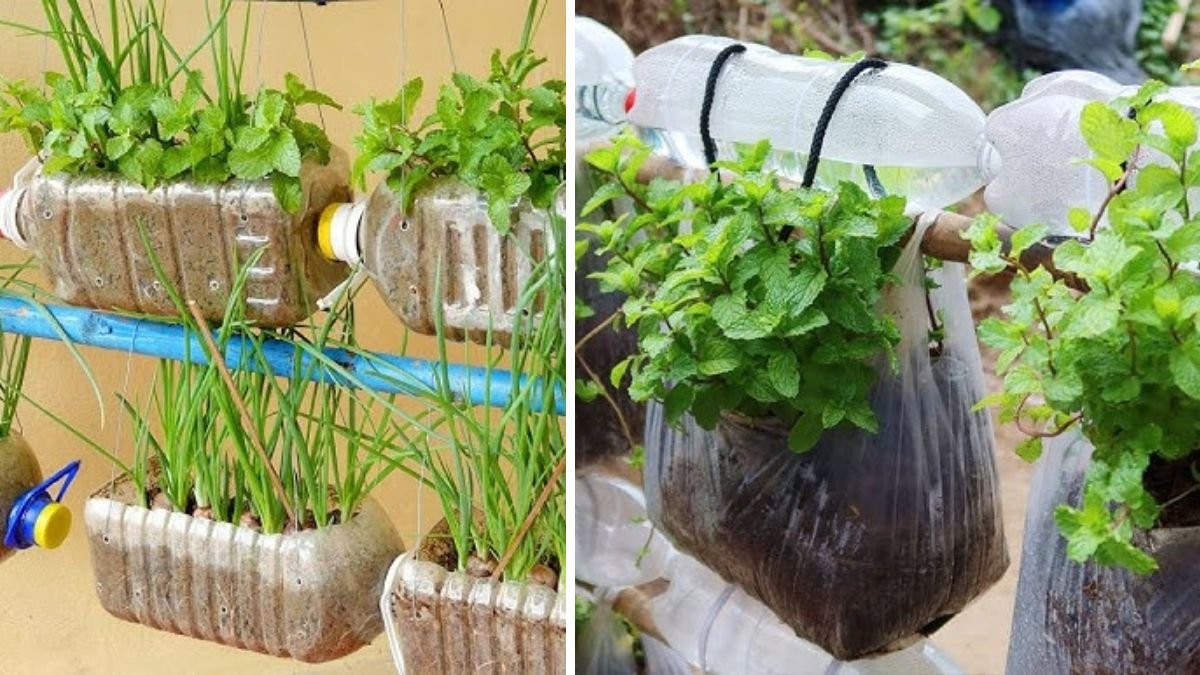
Plastic bottles can be repurposed in multiple ways: cut horizontally to create shallow planters, vertically for deep soil containers, or suspended to make hanging gardens. (newsminimalist.com)
Step-by-Step DIY: Growing Mint in Plastic Bottles
1. Self-Watering Bottle Planter
- Cut the top third of the bottle.
- Invert the top into the bottom section to act as a funnel.
- Insert a cotton wick through the bottle cap to transport water to the soil.
- Fill the funnel with potting mix and plant your mint cutting.
- Add water to the bottom reservoir; the wick keeps soil moist automatically.
This design is ideal for beginners or busy gardeners who want low-maintenance mint growth. (newsminimalist.com)
2. Countertop Herb Bottles
- Cut bottles in half.
- Fill the bottom with soil and plant mint in the upper half.
- Arrange a row of bottles along a sunny window sill or kitchen counter.
This setup keeps fresh mint accessible during cooking while adding a touch of greenery to your kitchen. (timesofindia.indiatimes.com)
3. Hanging Balcony Mint Garden
- Cut bottles horizontally and make drainage holes at the bottom.
- Attach twine or string around the bottle neck or body.
- Hang multiple bottles vertically along a balcony railing or wall.
- Plant mint in each bottle for a cascading, space-efficient herb garden.
This design maximizes vertical space and creates an attractive, fragrant green wall. (recipes4home.com)
Tips for Healthy Mint Growth
- Light Requirements: Place your bottles in partial to full sunlight for optimal growth. Mint thrives with at least 4-6 hours of sunlight per day. (timesofindia.indiatimes.com)
- Watering: Avoid overwatering; mint prefers moist but not soggy soil. Self-watering bottle designs are ideal for beginners.
- Pruning: Regularly trim the leaves to encourage bushy growth. Harvest small leaves frequently to stimulate continuous growth.
- Decorating Bottles: Paint, label, or decorate bottles to personalize your garden. Labels help you identify herbs and add a stylish touch. (soycarmin.com)
Creative Design Ideas
- Mini Herb Station: Line up several bottles with different herbs like mint, basil, and coriander on a sunny windowsill.
- Color-Coded Bottles: Use colored bottles or paint them to match your kitchen theme.
- Terraced Bottle Garden: Stack bottles on a balcony ledge to create a layered herb garden.
- Classroom Eco-Garden: Teach students about recycling and gardening simultaneously using clear bottles so roots are visible.
- Giftable Mint Bottles: Decorated bottles with fresh mint make charming, sustainable gifts for friends and family.
Benefits of Bottle Gardening
- Fresh Herbs Year-Round: Mint is always accessible for drinks and cooking.
- Budget-Friendly: Reuse plastic bottles instead of purchasing pots.
- Eco-Friendly: Reduces plastic waste while promoting sustainability.
- Space-Efficient: Suitable for balconies, kitchen counters, and small apartments.
- Educational: Great project for kids and community programs to learn about plants and recycling.
Real-World Inspiration
Communities worldwide are embracing recycled bottle gardens. In Mumbai, students built hydroponic herb planters using recycled bottles as part of a sustainability project. Urban gardeners frequently share creative designs on social media, from vertical herb walls to compact kitchen countertop gardens. These stories highlight the practicality and fun of growing mint in recycled bottles. (thebetterindia.com)
Suggested Authoritative Sources
- News Minimalist – Grow Mint in Recycled Bottles: Beginner-friendly DIY tips. (newsminimalist.com)
- Times of India – Kitchen Counter Herb Gardens: Step-by-step guide for urban spaces. (timesofindia.indiatimes.com)
- SOYCARMIN – Recycling Bottles for Gardening: Creative sustainability hacks. (soycarmin.com)
- Recipes4Home – Hanging Bottle Gardens: Vertical garden inspiration. (recipes4home.com)
- NDTV Food – Mini Herb Planters: Kitchen garden DIY inspiration. (food.ndtv.com)
Conclusion
Recycling plastic bottles to grow mint at home is a practical, creative, and eco-friendly project suitable for urban gardeners, families, and beginners. With a few simple materials and minimal effort, you can have fresh mint ready for cooking, teas, and garnishes all year round. These DIY bottle gardens not only make your home greener but also teach sustainability and reduce plastic waste.
Start your own recycled bottle mint garden today — whether hanging on a balcony, lined up on a counter, or forming a vertical herb wall — and enjoy the satisfaction of fresh herbs combined with eco-conscious living.