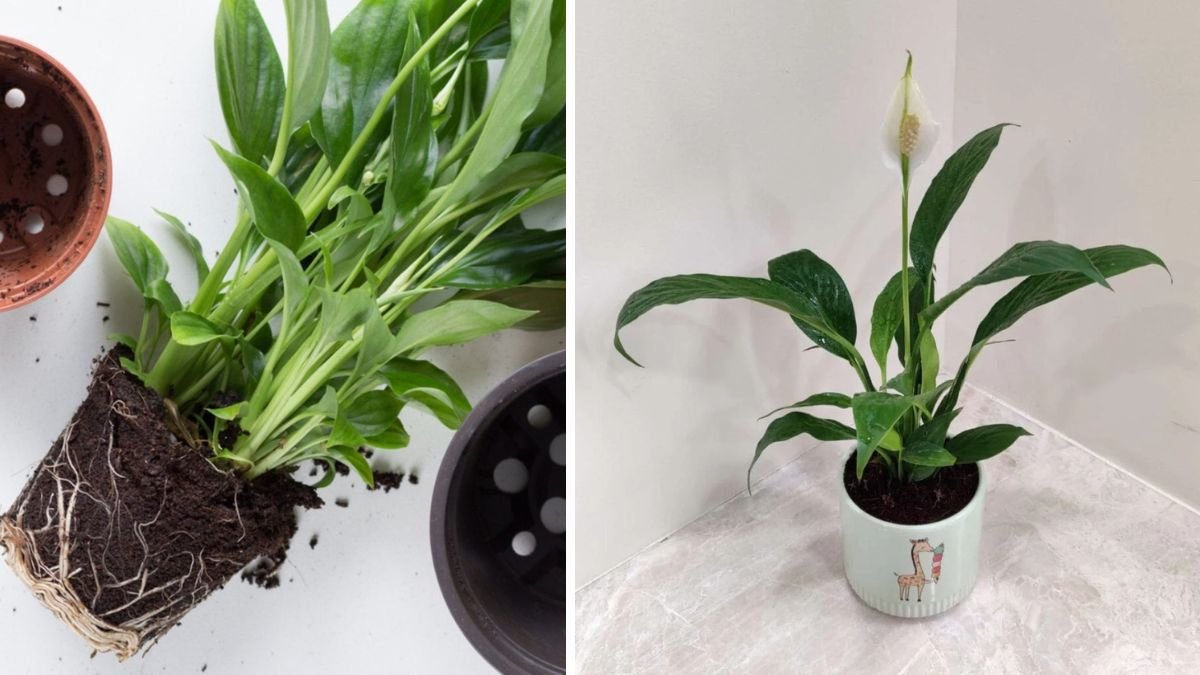
Peace Lilies are popular indoor plants thanks to their glossy leaves and elegant white blooms. Over time, however, even the healthiest Peace Lily can outgrow its pot, leading to root crowding, slowed growth, and fewer flowers. Repotting is essential for keeping your plant healthy and vibrant.
This guide explains how to tell when your Peace Lily needs repotting and the steps to do it properly.
Signs Your Peace Lily Needs Repotting
- Roots growing out of drainage holes: The plant has become root-bound
- Soil dries out quickly or compacts: Indicates limited space for roots
- Stunted growth or fewer flowers: Energy is focused on the roots, not blooms
- Top-heavy plant or tipping over: Root system cannot support growth
- Salt buildup or soil degradation: White crust on soil surface
Choosing the Right Time to Repot
- Spring or early summer is ideal, during the growing season
- Avoid repotting in winter, as growth slows
- Choose a pot 1–2 inches larger in diameter than the current one
Materials You’ll Need
- New pot with drainage holes
- Fresh potting soil (well-draining, peat-based)
- Scissors or pruning shears
- Watering can
- Optional: Activated charcoal to improve soil drainage and prevent odors
Step-by-Step Repotting Process
1. Remove the Plant Carefully
- Gently slide the Peace Lily out of its pot
- Loosen soil around the roots with your fingers
- Inspect for root rot, brown or mushy roots, and trim them
2. Prepare the New Pot
- Add a layer of fresh potting soil at the bottom
- Optionally, add a small amount of charcoal for drainage and freshness
3. Position the Plant
- Place the Peace Lily in the center of the new pot
- Roots should be spread out evenly
- Maintain the same soil level as before; do not bury the crown
4. Fill With Soil
- Add soil around the roots, gently pressing to remove air pockets
- Leave 1 inch of space at the top for watering
5. Water Thoroughly
- Water until excess drains out
- This settles soil and hydrates roots
6. Aftercare
- Keep the plant out of direct sunlight for 1–2 weeks to reduce stress
- Maintain consistent watering
- Resume normal care once the plant shows signs of growth
Tips for a Healthy Repotted Peace Lily
- Don’t overpot: Too large a pot can lead to root rot
- Avoid fertilizing immediately; wait 4–6 weeks
- Use fresh, well-draining soil for best results
- Monitor for yellowing leaves, which may indicate transplant shock
Common Mistakes to Avoid
- Cutting too many roots at once
- Burying the crown too deep
- Repotting during dormant season
- Overwatering after repotting
Benefits of Repotting
- Encourages stronger root development
- Promotes more vibrant blooms
- Prevents disease and root rot
- Keeps the plant compact and aesthetically pleasing
Final Thoughts
Repotting a Peace Lily is a simple but crucial step in keeping your plant healthy and blooming. By recognizing the signs of overcrowding, choosing the right time, and following proper repotting techniques, your Peace Lily will thrive in its new home and reward you with lush foliage and stunning white flowers.
Patanjali Solar Panels by Ramdev Baba2026 Ford F-150Maruti Suzuki Fronx 2026Future of Smartphones DebateSimple Movement After 70Toyota Mini Land Cruiser FJ 2026Maruti Baleno 2026Color Psychology MeaningEclipse of the CenturyHonda Jazz 2026Toyota Solar PanelChasing Meaning Not HappinessToyota Corolla Pickup 2026Maruti XL6 20267 Seater Family Car 32kmplRoyal Enfield Hybrid 2026Honda SP 125 New ModelToyota Tundra 20262026 IRS Tax Refund ScheduleLongest Solar Eclipse DateVivo 420MP SmartphoneTata Electric CycleHonda Activa 7G