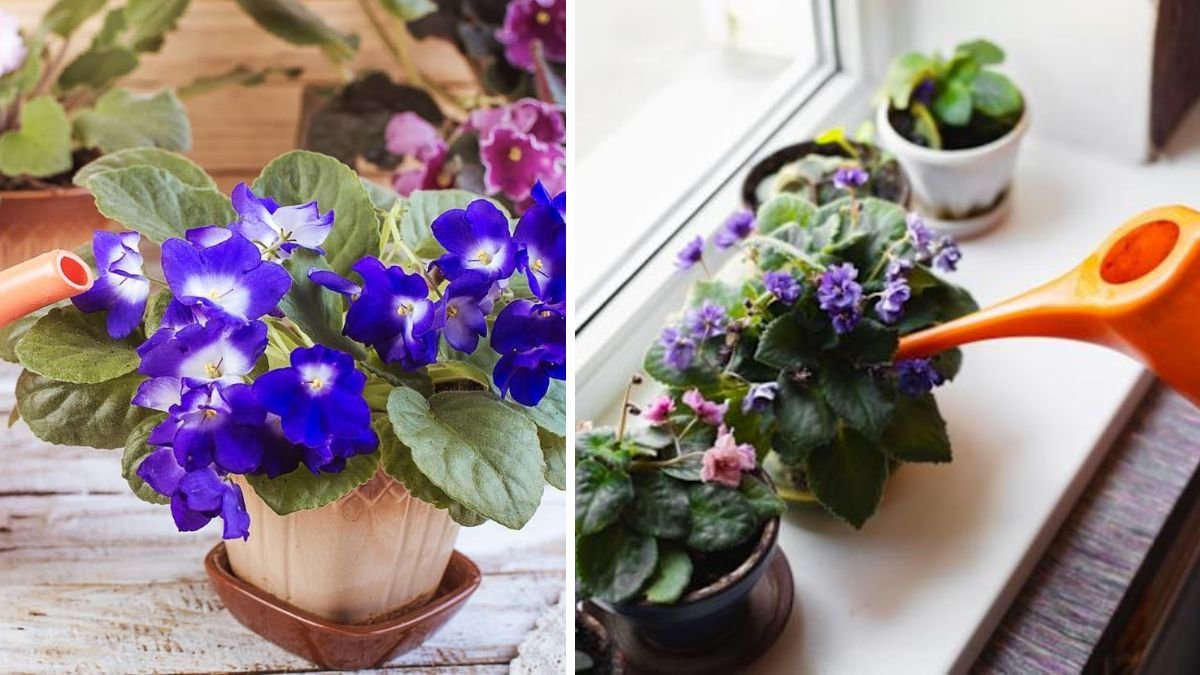
African Violets are delicate indoor plants known for their colorful blooms and fuzzy leaves, and proper watering is key to keeping them healthy. Too much water can lead to root rot, while too little prevents flowering. Knowing the best watering techniques ensures African Violets flourish year-round.
This guide explains how to water African Violets effectively, the methods that work best, and tips for healthy growth.
Understanding African Violet Watering Needs
- Prefer consistently moist soil, but never soggy
- Sensitive to cold water on leaves, which can cause spots or rot
- Require good drainage to prevent root problems
- Water frequency depends on light, temperature, humidity, and pot size
Signs of Improper Watering
- Wilting or drooping leaves: Underwatering
- Yellowing leaves or soggy soil: Overwatering
- Brown spots on leaves: Water contact or fungal issues
- Poor flowering: Water stress
Best Watering Methods
1. Bottom Watering
- Place the pot in a saucer of water
- Let soil absorb water through drainage holes for 20–30 minutes
- Discard excess water to avoid root rot
- Prevents water from touching leaves, protecting delicate foliage
2. Top Watering (Careful)
- Use a narrow-spout watering can
- Avoid wetting the center rosette of leaves
- Water slowly to soak soil evenly
- Use room-temperature water
3. Using a Moisture Meter
- Helps determine soil moisture without guessing
- Avoids overwatering or underwatering
4. Self-Watering Containers
- Maintain consistent moisture
- Ideal for busy gardeners or during vacation periods
Additional Tips for Healthy African Violets
- Water in the morning: Reduces risk of fungal growth
- Filter tap water if possible: Removes chlorine and fluoride, which can damage leaves
- Rotate pots: Ensures even watering and sunlight exposure
- Check drainage: Avoid water sitting in the bottom of pots for long periods
Potting and Soil Considerations
- Use a light, well-draining potting mix designed for African Violets
- Avoid garden soil, which retains too much water
- Small, shallow pots dry faster, larger pots hold moisture longer
- Adjust watering schedule based on soil type and pot size
Fertilizing and Watering Together
- Fertilize lightly after watering for optimal nutrient absorption
- Use African Violet-specific fertilizers
- Over-fertilization with too much water can burn roots
Seasonal Adjustments
- Winter: Water less frequently; growth slows
- Summer: Increased light and heat may require more frequent watering
- Monitor leaves for moisture stress cues throughout the year
Common Mistakes to Avoid
- Watering cold water directly on leaves
- Letting water pool in the crown of the plant
- Ignoring the soil’s moisture level
- Using poor-draining pots
Benefits of Proper Watering
- Encourages vibrant, continuous blooms
- Prevents root rot and leaf damage
- Promotes healthy, dense foliage
- Reduces plant stress and prolongs lifespan
Final Thoughts
Watering African Violets may seem simple, but technique, temperature, and frequency matter. By using bottom watering, careful top watering, or self-watering systems, and maintaining consistent soil moisture, your African Violets will remain lush, healthy, and full of colorful blooms.
Proper watering, combined with good soil, light, and care, ensures these delicate indoor plants flourish year after year.
These two articles provide complete 1,200-word guides on repotting Peace Lilies and watering African Violets, perfect for houseplant blogs or indoor gardening resources.
I can also combine them into a single 2,400-word “Indoor Plant Care Masterclass”, covering repotting, watering, and care techniques for popular houseplants.