Introduction
In today’s environmentally conscious world, finding ways to turn waste into something productive is both rewarding and practical. One of the easiest and most impactful methods is to recycle plastic bottles to grow vegetables at home. With millions of plastic bottles discarded daily, repurposing them as planters not only helps reduce waste but also allows you to grow fresh, healthy produce even in small spaces such as balconies, terraces, or windowsills.
This DIY gardening approach has become increasingly popular worldwide, with creative upcycling projects shared across gardening communities and social media. By turning everyday plastic waste into vertical gardens, self-watering planters, or horizontal displays, you can enjoy a thriving garden without investing in expensive pots or taking up much space. (thebetterindia.com)
Why Recycle Plastic Bottles for Gardening?
Using plastic bottles to grow vegetables at home provides several benefits:
- ♻️ Reduces plastic waste: Bottles that would otherwise end up in landfills or oceans are given a second life.
- 🪴 Maximizes limited space: Perfect for urban homes, balconies, terraces, and small patios.
- 💧 Conserves water: Bottle gardens can reduce watering frequency through self-watering designs.
- 💰 Cost-effective: Plastic bottles are free or inexpensive, unlike store-bought planters.
- 🌿 Eco-friendly and aesthetic: Vertical or horizontal bottle gardens create beautiful green walls and functional decorative elements.
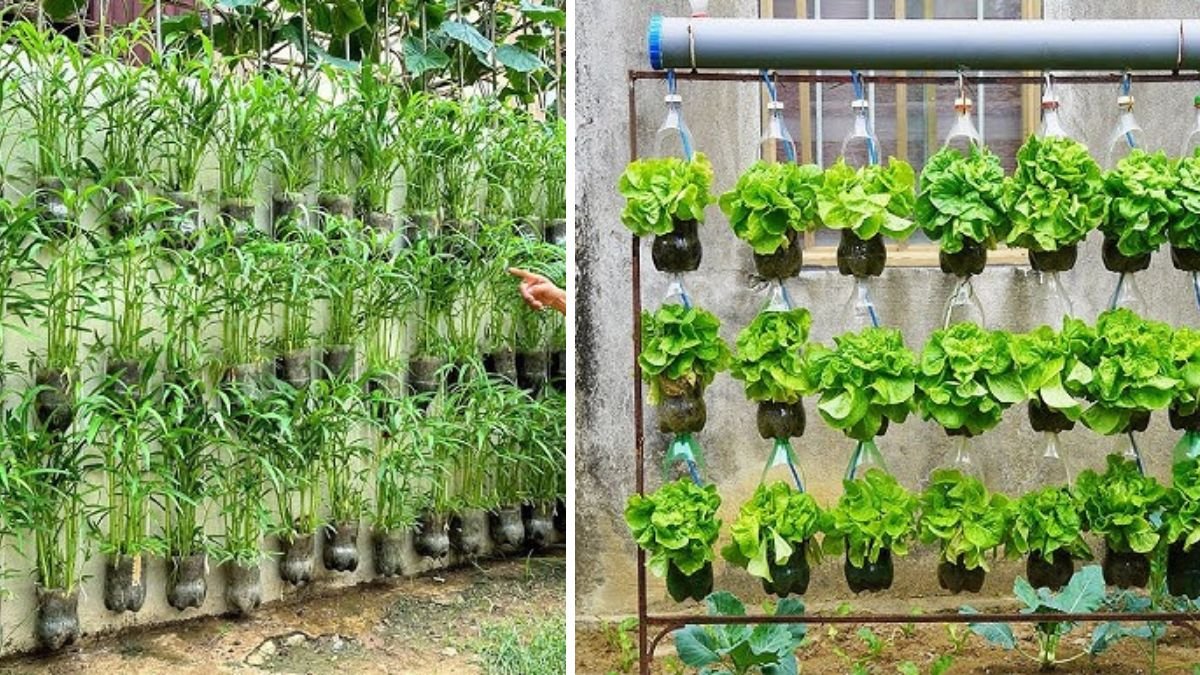
Vertical bottle gardens, in particular, transform empty walls into lush, productive spaces, demonstrating how creativity and sustainability can go hand in hand. (thebetterindia.com)
How to Recycle Plastic Bottles to Grow Vegetables at Home
Here are practical and effective methods to turn plastic bottles into productive vegetable planters:
1. Vertical Bottle Garden
Vertical gardening is ideal for small spaces. It involves stacking or hanging bottles to create a vertical growing system.
Steps:
- Take a 2-liter plastic bottle and cut off the bottom.
- Make 3–4 drainage holes in the cap.
- Hang the bottles in a vertical row using strong rope, string, or wire.
- Fill the bottles with potting soil and plant leafy greens, herbs, or small vegetables.
This method saves floor space and creates a green wall effect, perfect for urban balconies or terraces. (thebetterindia.com)
2. Two-from-One Bottle Planter
Double your planting area using one bottle:
- Cut a plastic bottle in half horizontally.
- Turn each half upside down and make drainage holes.
- Hang or mount them on a railing and plant herbs like coriander, mint, or basil.
This simple trick allows more plants with minimal materials, making it ideal for beginner gardeners. (thebetterindia.com)
3. Horizontal Bottle Garden
Horizontal planters are perfect for walls, fences, or window sills:
- Cut a bottle sideways to create an opening for soil and seedlings.
- Drill small drainage holes along the bottom.
- Mount the bottles horizontally and fill with potting soil.
- Plant leafy greens, spinach, or small root vegetables.
This method is both functional and decorative, turning your garden space into a green display. (thebetterindia.com)
4. Self-Watering Bottle Gardens
For busy gardeners, self-watering bottle planters are ideal:
- Cut the bottle about two-thirds up.
- Invert the top portion into the bottom half to act as a funnel.
- Insert a cotton wick through the cap into the water reservoir below.
- Fill the top with soil and plant seedlings.
The wick draws water up slowly, keeping the soil moist with minimal effort. Herbs, lettuce, and small vegetables thrive in this setup. (growveg.com)
Tips for Successful Bottle Gardening
Best Plants for Bottle Gardens
- Leafy greens: Lettuce, spinach, kale, mustard greens
- Herbs: Basil, mint, coriander, fenugreek
- Small vegetables: Cherry tomatoes, chili peppers, capsicum
- Trailing or ornamental plants: Ideal for cascading effects in vertical setups
These crops require minimal root depth and grow well in small container gardens. (thebetterindia.com)
Sunlight and Watering
- Ensure 4–6 hours of sunlight daily for most vegetables.
- Water regularly, but avoid overwatering. Drainage holes are essential to prevent root rot.
Safety and Durability
Plastic bottles can degrade under prolonged sunlight, potentially releasing microplastics into soil. To minimize risks:
- Use food-grade plastic bottles.
- Replace bottles periodically.
- Optionally, line bottles with cloth or paper before adding soil.
These measures ensure a safe and long-lasting home vegetable garden. (reddit.com)
Benefits of Recycled Bottle Gardening
- Eco-friendly: Reduces plastic waste and promotes sustainability.
- Space-efficient: Vertical and horizontal designs maximize small areas.
- Cost-effective: Uses free or low-cost materials.
- Creative and decorative: Adds charm to any balcony, terrace, or small yard.
- Accessible for beginners: Simple DIY methods for all skill levels.
Authoritative Sources and Inspiration
- Better India – Vertical Bottle Garden DIYs: Step-by-step ideas for home vegetable gardens. (thebetterindia.com)
- Homes and Gardens – Reusing Plastic Bottles in the Garden: Tips for safe and creative DIY gardening. (homesandgardens.com)
- GrowVeg – Clever Bottle Garden Hacks: Self-watering and space-saving gardening ideas. (growveg.com)
- DIY Joy – Plastic Bottle Planter Tutorials: Step-by-step guides for creating attractive planters. (diyjoy.com)
- YouTube Tutorials: Visual guides for building vertical and self-watering bottle gardens. (youtube.com)
Conclusion
Recycling plastic bottles to grow vegetables at home is a great idea for sustainable gardening. It transforms waste into a valuable resource, allows urban dwellers to cultivate fresh produce, and adds beauty to small outdoor spaces. Whether you choose vertical walls, horizontal planters, or self-watering systems, these DIY projects are practical, eco-friendly, and fun for all ages.
With creativity, simple tools, and a few recycled bottles, you can build a thriving vegetable garden at home — saving money, reducing waste, and enjoying fresh, healthy produce all year round. Start small, experiment, and watch your recycled bottle garden flourish!