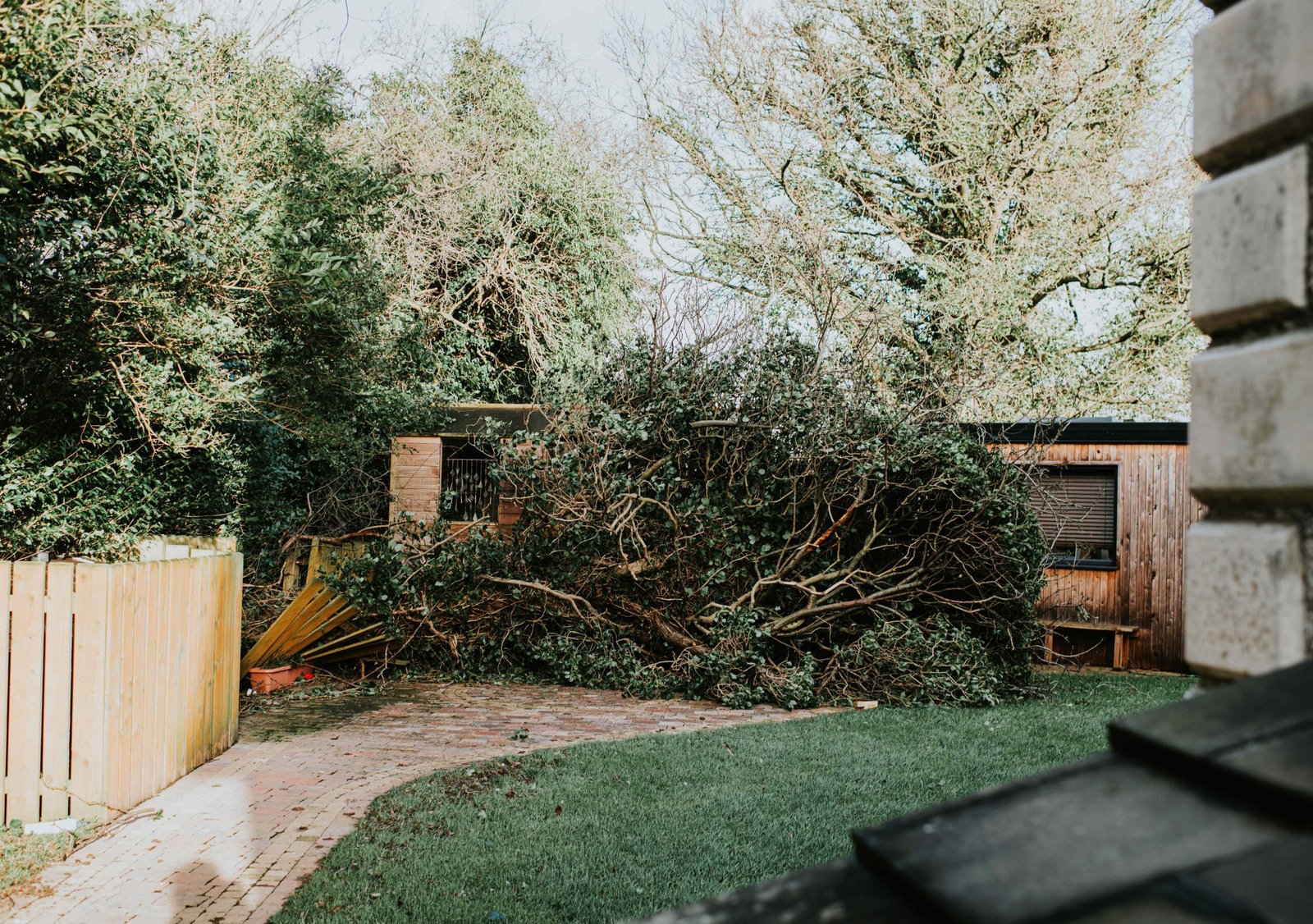
Trees are the backbone of any yard, providing shade, privacy, and aesthetic appeal. But while they’re resilient, strong winds can pose serious threats, causing broken branches, uprooted trees, and property damage. Certain species, due to their structure, root system, or wood strength, are particularly vulnerable to windstorms. Identifying these trees and taking preventive measures can save both your landscape and your wallet.
In this guide, we’ll highlight six tree types most susceptible to wind damage and provide practical tips on how to protect them.
1. Silver Maple (Acer saccharinum)
Silver maples are popular for their rapid growth and dense, spreading canopy. However, their fast growth comes at a cost: brittle wood.
Why They’re Vulnerable:
- Thin, weak branches prone to breaking.
- Shallow root system makes them susceptible to uprooting in strong winds.
- Large canopy catches wind like a sail.
Protection Tips:
- Regular Pruning: Remove weak or dead branches to reduce wind resistance.
- Structural Support: Young trees can benefit from staking until roots establish.
- Root Care: Avoid compacting soil around the root zone and mulch to retain moisture.
2. Bradford Pear (Pyrus calleryana ‘Bradford’)
Bradford pear trees are known for their beautiful spring blossoms, but their branch structure is notoriously weak.
Why They’re Vulnerable:
- Narrow, V-shaped branch angles lead to splitting.
- Brittle wood is prone to breaking during wind storms.
- Rapid growth can exacerbate structural weaknesses.
Protection Tips:
- Selective Pruning: Remove crowded branches and thin the canopy.
- Plant Alternative Varieties: If planting new trees, consider more wind-resistant pear varieties with stronger branch angles.
- Avoid Overfertilization: Excessive nitrogen encourages rapid, weak growth.
3. Poplar Trees (Populus spp.)
Poplars are fast-growing shade trees often used for privacy screens. While they grow quickly, their shallow roots and soft wood make them vulnerable.
Why They’re Vulnerable:
- Shallow root system increases the risk of toppling.
- Soft wood easily snaps under wind stress.
- Tall, slender trunks amplify sway during storms.
Protection Tips:
- Windbreaks: Plant taller, sturdy trees or shrubs upwind to reduce wind force.
- Spacing: Avoid planting in clusters that might compete for soil stability.
- Maintenance: Remove diseased or weak limbs early.
4. Willow Trees (Salix spp.)
Willows are beloved for their graceful, drooping branches, but they are highly susceptible to wind damage due to their delicate structure.
Why They’re Vulnerable:
- Thin, flexible branches are prone to snapping.
- Extensive but shallow root systems reduce anchorage.
- High canopy catchment area increases wind force impact.
Protection Tips:
- Prune Strategically: Trim overly long branches to reduce leverage during wind events.
- Regular Health Checks: Monitor for rot or fungal disease weakening wood.
- Support Young Trees: Stake during early growth to promote strong, upright form.
5. Pine Trees (Pinus spp.)
Pines are commonly planted for privacy and evergreen color, but certain species are wind-sensitive, particularly those with shallow roots or dense crowns.
Why They’re Vulnerable:
- Dense foliage acts as a wind sail.
- Shallow or compacted roots reduce stability.
- Heavy snow or ice in winter can compound stress.
Protection Tips:
- Thin the Crown: Remove smaller branches to reduce wind resistance.
- Mulch Root Zone: Maintain soil moisture but avoid piling mulch against the trunk.
- Windbreaks: Planting shrubs or other trees on the windward side helps buffer strong gusts.
6. Silver Linden (Tilia tomentosa)
Silver lindens are attractive landscape trees but are vulnerable due to weak branch unions and broad canopy spread.
Why They’re Vulnerable:
- Brittle branch structure prone to splitting.
- Large, wide canopy catches wind, increasing strain on roots.
- Rapid growth can outpace root development.
Protection Tips:
- Regular Pruning: Remove crossing or weak branches to prevent breakage.
- Structural Support for Young Trees: Use staking until established.
- Spacing Considerations: Avoid planting too close to structures or other trees to prevent wind tunnel effects.
General Strategies to Protect Trees from Wind Damage
While certain species are inherently vulnerable, proactive care and landscape design can significantly reduce wind damage:
1. Strategic Planting Locations
- Plant vulnerable trees away from edges of the yard, fences, and structures.
- Place windbreaks such as hedges, dense shrubs, or sturdier trees on the windward side.
2. Proper Pruning
- Remove dead, diseased, or structurally weak branches.
- Thin the canopy to reduce wind resistance while maintaining shade and aesthetics.
- Avoid topping trees, as this can weaken the structure and increase vulnerability.
3. Staking Young Trees
- Support trees during their first 2–3 years.
- Use soft ties and allow slight movement, as rigid staking can hinder root development.
4. Mulching and Soil Care
- Mulch around the base to retain moisture and protect roots from erosion.
- Avoid piling mulch against the trunk.
- Ensure soil is well-draining and not compacted, allowing roots to anchor firmly.
5. Regular Health Inspections
- Monitor for fungal infections, pests, or decay, which can weaken tree structure.
- Early intervention prevents catastrophic branch failure during windstorms.
6. Professional Consultation
- For large or mature trees, hire an arborist for structural assessment.
- Experts can cable, brace, or prune high-risk limbs safely.
- They also advise on long-term wind mitigation strategies tailored to your property.
Signs a Tree Is at Risk
Before a windstorm, check your trees for:
- Cracks or splits in the trunk.
- Dead or hanging branches.
- Leaning trees or exposed roots.
- Hollow or decayed wood at the base or branches.
- Crowded canopy that increases wind pressure.
Identifying these warning signs early can prevent damage to the tree, home, or vehicles during storms.
Conclusion
Strong winds are a natural part of life, but certain trees—like silver maples, Bradford pears, poplars, willows, pines, and silver lindens—are particularly vulnerable due to brittle wood, shallow roots, and broad canopies. Understanding which trees are at risk and implementing preventive measures can protect both your landscape and your property.
By choosing strategic planting locations, regular pruning, staking young trees, maintaining healthy soil, and consulting arborists when needed, you can minimize wind damage while keeping your yard vibrant and safe. Proactive tree care ensures that these beautiful plants remain an asset rather than a liability, allowing you to enjoy their shade, beauty, and ecological benefits year after year.
Your yard doesn’t have to be at the mercy of storms—preparedness and smart care can save your trees and give you peace of mind.