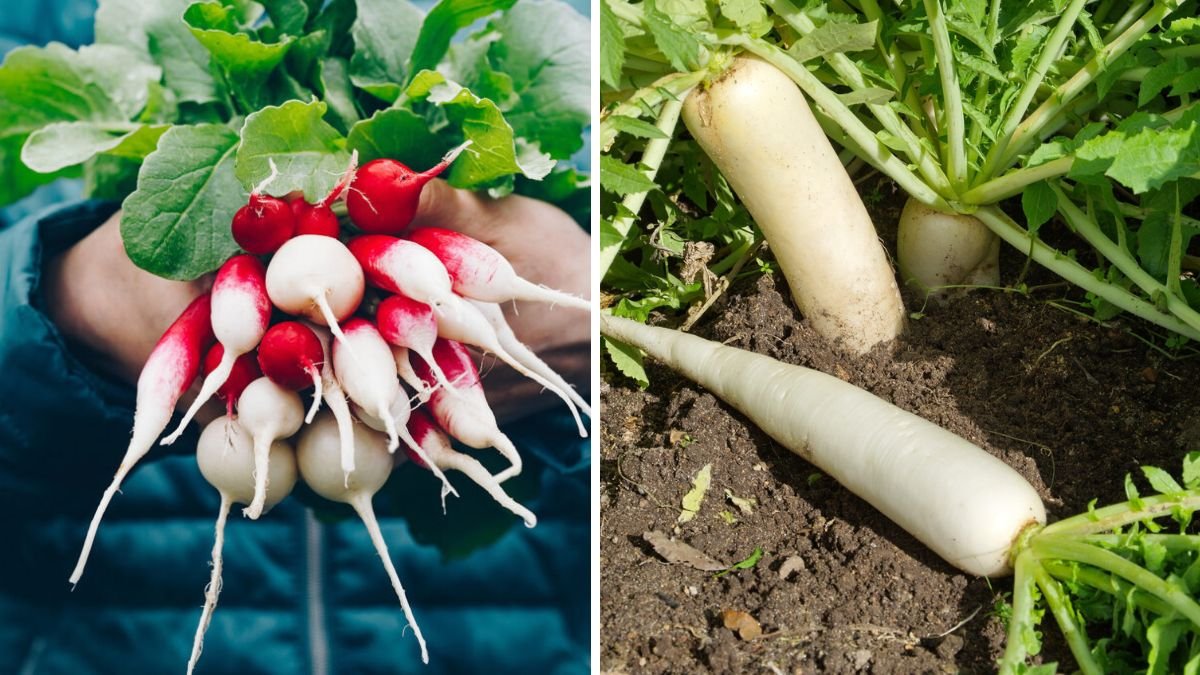
Introduction: Grow Radishes All Year with Ease
Radishes are one of the fastest-growing and most rewarding root vegetables for home gardeners. Their crisp texture and peppery flavor make them perfect for salads, sandwiches, and pickles. Many people assume radishes are only a seasonal crop, but with the right techniques, you can enjoy big, healthy radishes throughout the year.
A recently trending tip shared in gardening circles and videos titled “This Tip Lets Me Grow Big Radishes All Year — Double the Harvest!” highlights simple yet effective strategies to maximize root size and harvest frequency. These strategies involve succession planting, soil preparation, proper spacing, and consistent care, making radish cultivation both productive and satisfying.
Whether you have a backyard garden, raised beds, or containers, this guide will teach you how to achieve larger, more flavorful radishes year-round with minimal effort.
Why Radishes Are Ideal for Year-Round Gardening
Radishes are naturally quick-maturing, often ready to harvest in just 3–4 weeks. This short cycle allows gardeners to plant multiple batches sequentially, ensuring a continuous supply. Additionally, radishes are adaptable to cooler temperatures and can tolerate light frost, making them suitable for early spring, fall, and even mild winters.
By staggering plantings and maintaining proper soil and water conditions, home gardeners can extend the harvest season well beyond the traditional spring and fall windows. This approach also increases overall yield, often resulting in double the harvest compared to a single planting.
Tip #1: Use Succession Planting
One of the most effective ways to grow radishes all year and maximize yield is succession planting. This technique involves sowing small batches of seeds at regular intervals instead of planting all at once.
How to succession plant:
- Sow seeds every 7–10 days in a dedicated bed or container.
- Use multiple rows or separate sections so that as one batch matures, another is ready to harvest.
- In cooler months, start seeds indoors or in containers to maintain continuous growth.
Succession planting ensures you always have radishes ready for harvest, eliminating gaps in supply and allowing for multiple harvests in a single season.
Tip #2: Prepare the Soil for Bigger Roots
Healthy radishes start with well-prepared soil. Loose, well-draining soil encourages roots to expand and grow plump rather than becoming small or misshaped. Overly rich soil high in nitrogen should be avoided, as it promotes leafy growth at the expense of root development.
Soil preparation steps:
- Loosen the soil to remove rocks and debris.
- Mix in compost or well-rotted organic matter for balanced fertility.
- Adjust soil pH to slightly acidic to neutral (6.0–7.0) for optimal nutrient uptake.
Raised beds or containers work well for radishes, as they allow for deep, loose soil that promotes larger, uniform roots.
Tip #3: Timing and Temperature
Radishes are cool-season crops that thrive in moderate temperatures. Hot, dry conditions can cause roots to become woody or bolt prematurely. To grow radishes year-round:
- Sow early spring and late fall outdoors when soil temperatures are cooler.
- In hot climates, use partial shade or shade cloth to prevent heat stress.
- In mild winters, grow cold-tolerant varieties and protect them with mulch or cloches.
Maintaining suitable temperature conditions helps ensure rapid growth, plump roots, and enhanced flavor.
Tip #4: Thin Seedlings for Larger Roots
Radish seeds often germinate densely, which can lead to competition for nutrients and stunted growth. Thinning seedlings is essential to achieve larger, plumper roots.
- Thin seedlings when they reach a few centimeters in height.
- Maintain 4–5 cm (1.5–2 in) spacing between plants, depending on variety.
- Snip excess seedlings at the soil line rather than pulling to avoid disturbing nearby roots.
Thinning improves airflow, reduces disease risk, and ensures that remaining plants have sufficient resources to grow full-sized roots.
Tip #5: Water Consistently
Consistent moisture is key to growing healthy radishes. Inconsistent watering can cause splitting or pithy textures in roots.
Watering guidelines:
- Water deeply once or twice weekly, adjusting frequency based on weather.
- Avoid overhead watering to keep foliage dry and minimize disease.
- Maintain even soil moisture to promote rapid, uniform root growth.
Proper watering ensures crisp, tender radishes with excellent flavor.
Tip #6: Harvest at the Right Time
Timing your harvest is crucial. Radishes grow quickly, and leaving them in the ground too long can result in woody or bitter roots.
- Harvest radishes when roots are about 2.5 cm (1 in) in diameter for optimal size and taste.
- Check frequently in succession plantings to prevent bolting.
- Use scissors or small garden tools to harvest without disturbing nearby plants.
By harvesting at the right stage, you ensure maximum flavor, texture, and overall yield.
Bonus Tips for Bigger Radishes
To further improve radish size and productivity:
- Use deeper raised beds or larger containers to give roots more room to grow.
- Avoid excessive nitrogen fertilizers, which encourage leaf growth rather than root growth.
- Mulch the soil to retain moisture and keep temperatures stable during warmer months.
- Rotate crops annually to prevent soil-borne pests and diseases.
- Stagger plantings strategically to maintain a continuous harvest cycle.
These additional measures, combined with succession planting and proper care, often result in double the harvest compared to conventional planting methods.
Background Context: Why This Method Works
Radishes are ideal for year-round home gardening due to their short growth cycle and adaptability. Using succession planting and proper soil management, gardeners can bypass seasonal limitations and achieve multiple harvests.
This approach is practical for both outdoor gardens and container setups, allowing urban gardeners and backyard enthusiasts to enjoy fresh radishes consistently. The combination of proper spacing, thinning, watering, and harvest timing maximizes yield and ensures high-quality roots throughout the year.
Suggested Authoritative Sources
For further guidance and expert advice on radish cultivation:
- Royal Horticultural Society (RHS) – Radish growing tips and soil preparation. (rhs.org.uk)
- Harvest to Table – Succession planting strategies for continuous harvests. (harvesttotable.com)
- Times of India Gardening Section – Common radish gardening mistakes and solutions. (timesofindia.indiatimes.com)
- Gardenary – Tips for raised bed and container radish cultivation. (gardenary.com)
These sources provide reliable, science-based advice and step-by-step guidance for growing radishes efficiently and safely.
Conclusion
Growing big radishes all year and doubling your harvest is achievable with a few simple, well-planned steps. By preparing your soil, spacing seedlings correctly, maintaining consistent moisture, using succession planting, and harvesting at the optimal time, you can enjoy fresh, crisp radishes throughout the seasons.
Whether you have a small container garden or a backyard plot, these tips ensure maximum yield, superior flavor, and a constant supply of radishes for your kitchen. With proper care, your radish harvests can be larger, faster, and more rewarding than ever before.
Start applying these tips today and experience year-round radish success in your own garden!